
Buldak isn't a noodle company. It's a single product line from Samyang Foods that became so culturally dominant after 2014 that most US grocery shoppers don't know the parent brand exists. The original red-bag Buldak-bokkeum-myeon (fire-chicken stir-fried noodle) — pronounced bul-dahk-bok-eum-myun — launched in April 2012 and now anchors a product family with at least fourteen variants across stir-fry, soup, and cup formats. Here's everything that matters about the brand.
What is Buldak?
Buldak is a Korean-style instant stir-fried noodle (bokkeum-myeon) developed by Samyang Foods, the South Korean instant-ramen pioneer founded in 1961. The name is literal: bul (fire) + dak (chicken). The product is sold dry — five seasoning components per packet (noodle brick, liquid spicy sauce concentrate, dehydrated seaweed-and-sesame topping, and depending on variant, a flavored oil and a powdered cheese sachet) — and prepared by boiling 5 minutes, draining all but 8 tablespoons of water, then stirring the sauce in until the noodles coat. The result is glossy, fire-engine-red noodles eaten directly from a bowl, not in broth.
The product line is what put Samyang on the global map. Before Buldak, Samyang was a stable but quiet domestic-Korean player, distant second to Nongshim. Within four years of Buldak's launch, Samyang's exports tripled.
The Samyang origin story
Samyang Foods (삼양식품) was founded in 1961 by Jeon Joong-yoon, who is credited with introducing the modern instant ramen format to Korea two years later — Korea's first commercial instant noodle was Samyang Ramyeon, released in September 1963. For five decades, that original Samyang Ramyeon was the company's flagship.
The Buldak product line came from elsewhere. In 2010, Kim Jung-soo — daughter of the founder and then a Samyang executive — visited a small restaurant in Seoul's Myeongdong district where queues regularly formed for the spicy buldak (fire chicken) dish on the menu. She tracked the buyer behavior: people were specifically seeking out the burn. The dish wasn't just food. It was an emotional outlet — a way to cope with stress through deliberate physical intensity. She brought the observation back to Samyang's R&D team with a brief: replicate that experience in an instant noodle.
The product launched April 16, 2012, at retail price ₩900 (about $0.75 at the time). Internal forecasts predicted a niche product. Within two months, it was outselling every other instant noodle in Samyang's catalog. By 2014, a YouTube format — the Fire Noodle Challenge, eating a full pack on camera — had spread to Western audiences via Korean YouTubers like English Bros and food channels like Eric Bandholz. The challenge format mattered: it gave Buldak a use case (the dare) that no other instant noodle could match. Western markets caught the brand through the challenge, not through grocery distribution.
Samyang's overseas revenue, ₩9 billion in 2011, surpassed ₩240 billion by 2018. By 2024, the company's market cap had increased roughly tenfold from pre-Buldak levels. The product line is the single largest contributor to that growth.
The Buldak flavor lineup explained
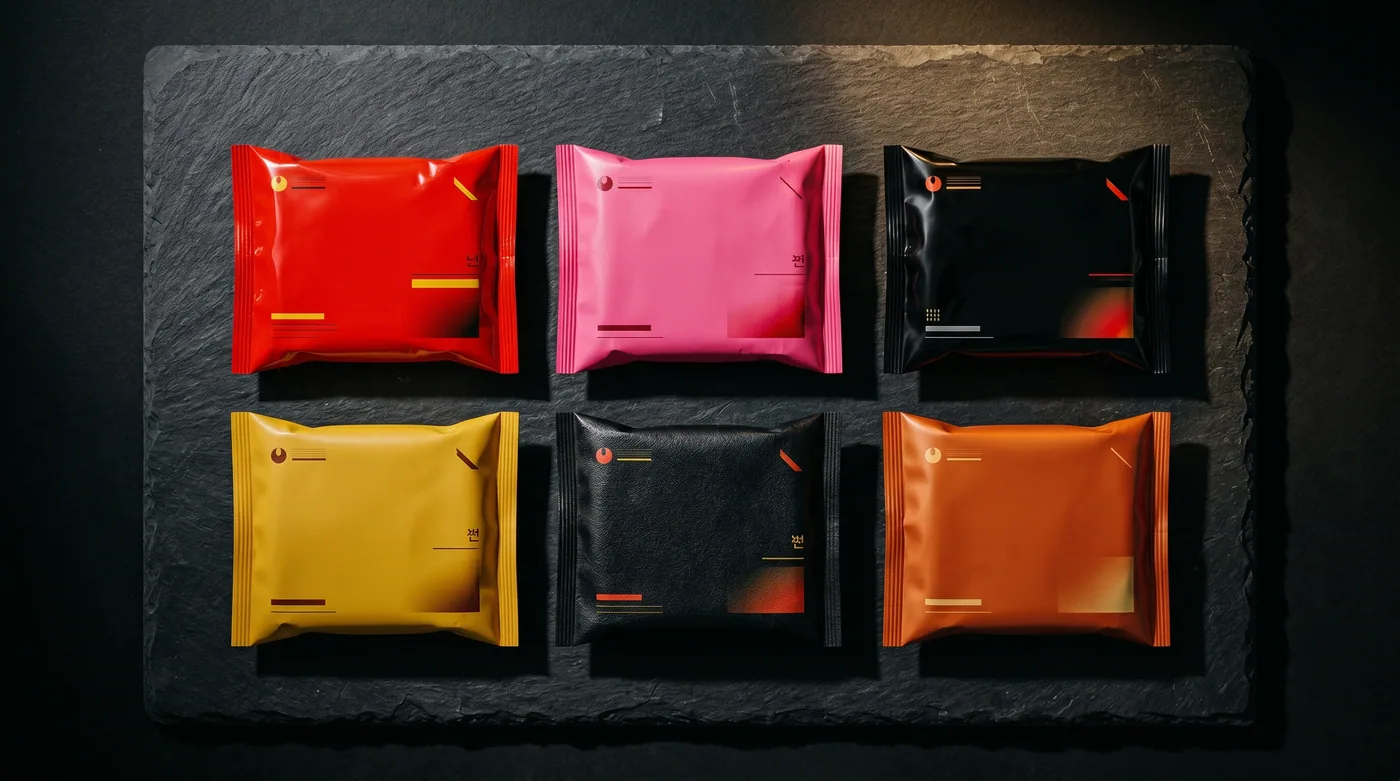
The product line now spans at least fourteen variants. The core taxonomy:
Stir-fry (bokkeum) format — drained, not soup:
- Original Hot Chicken (red bag) — the 2012 flagship, 4,404 SHU
- 2x Spicy / Hek (Extra) Buldak (matte black bag) — launched 2017, ~8,706 SHU
- 3x Spicy (limited release) — pushes past 13,000 SHU; appears sporadically
- Carbonara (pink bag) — March 2017, creamy cheese-and-pepper, 4,404 SHU
- Cheese (yellow bag) — 2014, dehydrated cheddar adds milky-fat mellowness
- Jjajang (glossy black bag — not the 2x Spicy) — Korean black-bean savory crossover
- Curry (mustard-yellow bag) — Korean-style curry with the Buldak heat backbone
- Habanero Lime — sharper citrus-pepper profile, limited US release
- Quattro Cheese — four-cheese variant, lower heat
- Truffle — limited premium release
- Corn — sweet-corn variant, very mild
- Ice — designed to be eaten cold after a longer rest; novel format
- Light — lower-calorie reformulation (~430 cal vs ~530 cal)
Soup format (the original Hot Chicken with broth instead of stir-fry):
- Buldak Stew — soup version, makes a true broth bowl rather than dry noodles
Cup formats:
- Buldak Cup — single-serving cup, all major flavors
- Big Bowl — larger cup, ~110g vs the standard cup's ~70g
The cup versions ship with less seasoning per gram of noodle, and the noodle texture is processed for hot-water-only prep. The packet versions are the canonical product.
Pink, Black, Cheese, Cup — which variant to buy first
For a first Buldak purchase, the decision tree is shorter than the lineup makes it look.
- You want to know what the fuss is about. Buy the Original red bag. Anything else is the flanker — judge the brand by the flagship first.
- You can't handle 4,000+ SHU directly. Buy the Carbonara (pink bag). The cream emulsion buffers the heat without removing it; first-timers consistently rate it the most enjoyable entry point. The Carbonara is also why most Western consumers know Buldak — the pink bag exploded on TikTok between 2020 and 2022.
- You want maximum heat. Buy the 2x Spicy (black bag). The Scoville roughly doubles. Stop here unless you've actively trained your tolerance — the 3x Spicy isn't widely distributed in the US and the gap from 2x is small in practice.
- You want something completely different. Buy the Jjajang (also a black bag, but with the jjajang lettering). Korean black-bean savory with Buldak's spice backbone — a different dish entirely, not just another heat tier.
- You want a sampler. Buy a 5-flavor variety pack. Original, Carbonara, Cheese, Curry, Jjajang in one box — the cleanest way to decide which variant earns the long-term pantry slot.
The cup formats are correct only if you have no pot. The texture difference is real, and the packet is around the same price.
The Carbonara variant — why it went viral
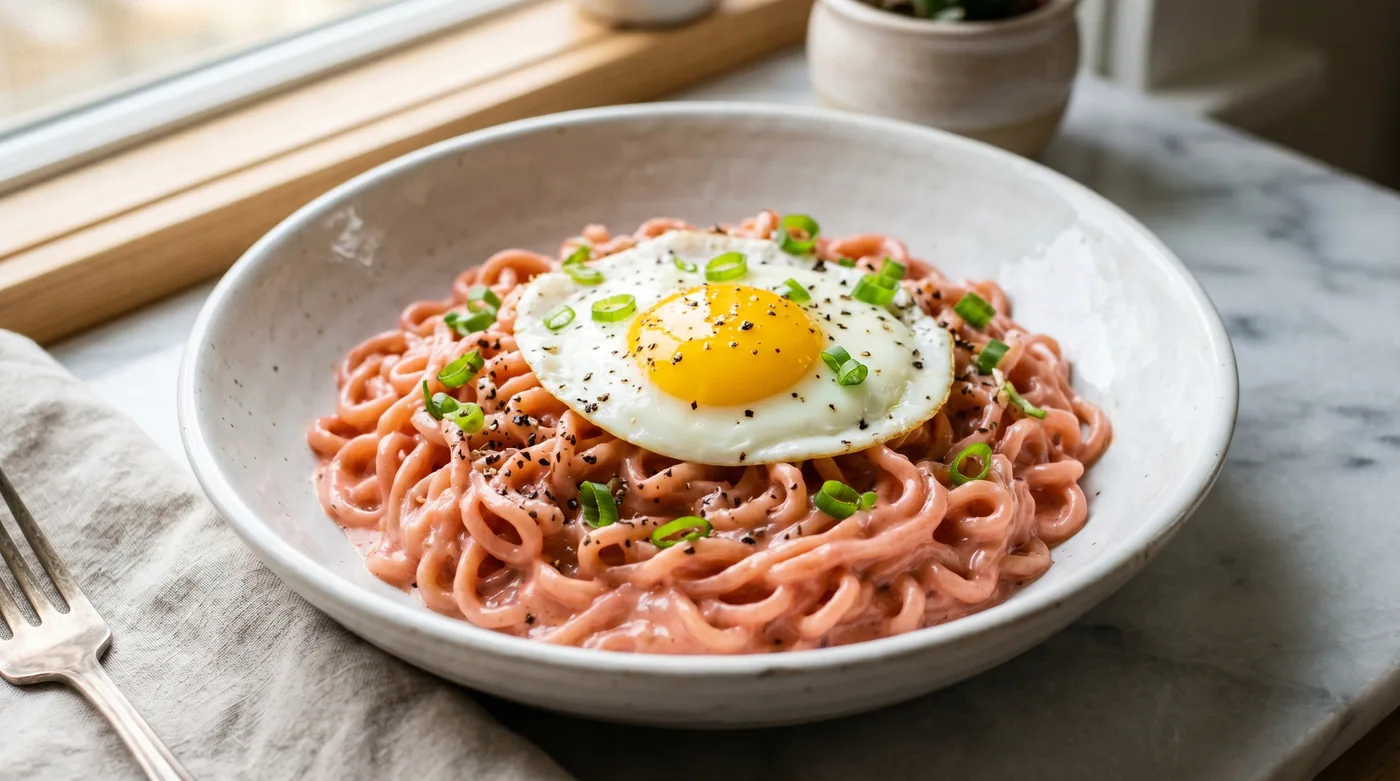
The pink-bag Carbonara is a 2017 launch, not the original flavor — but for US audiences under 25, it might be the primary Buldak association. The Carbonara is the same noodle base as the original, with the spice level identical at 4,404 SHU. What changes is the sauce: cream powder, cheese powder, and black pepper are added to a base of the same gochugaru-and-chicken-stock concentrate that defines the original. Stirred together with the included sauce packet plus an extra splash of milk (a hack the bag doesn't print but every Korean food blogger does), the noodles coat in a glossy pink emulsion that reads more like rosé pasta than instant ramen.
Carbonara went viral on TikTok across 2020–2022 — peak Buldak-on-social-media — and remains the most-purchased Buldak variant on Amazon US. The flavor sits in an unusual product position: it's spicy enough to scratch the Buldak itch but creamy enough to function as comfort food. That dual identity is rare in the instant-noodle category and explains why it converted casual viewers into repeat buyers in a way the original red bag didn't.
How spicy is Buldak, really?
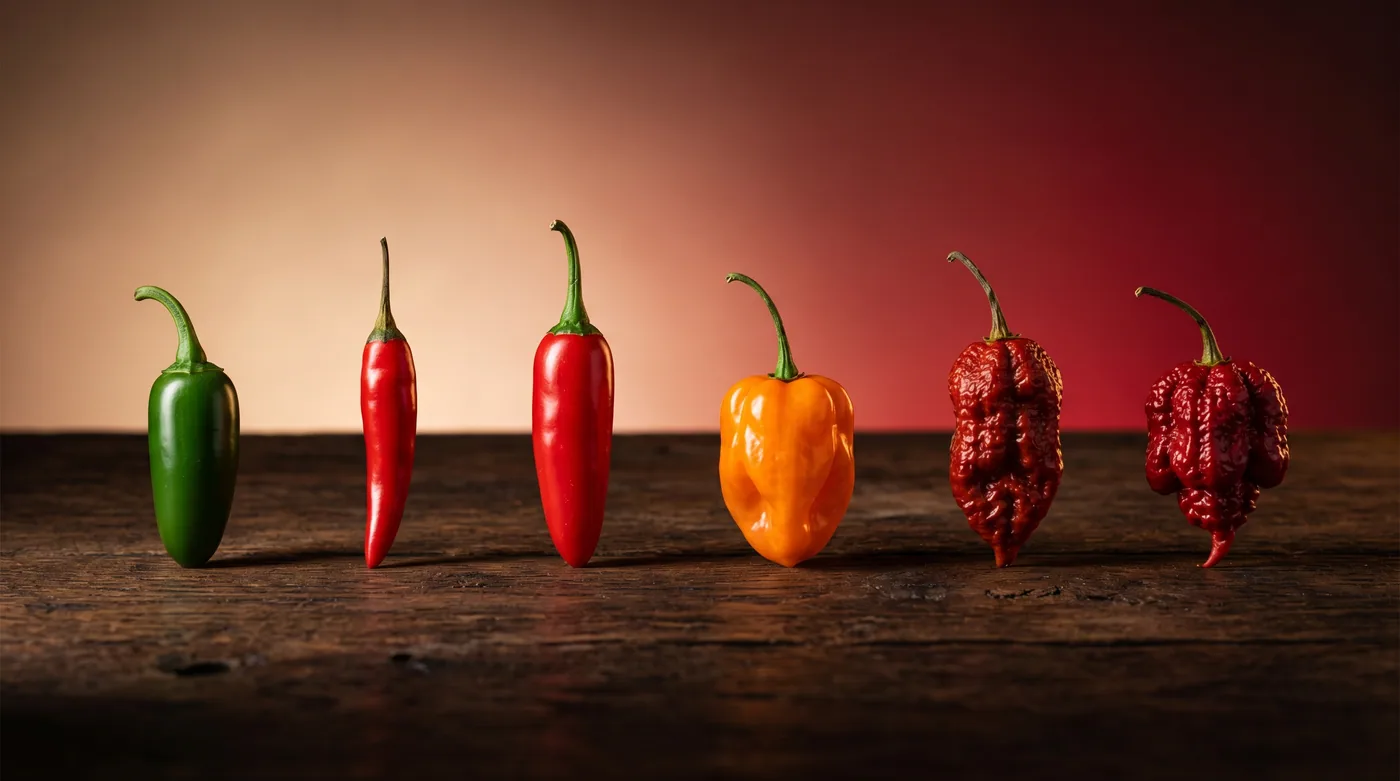
The published Scoville Heat Units (SHU) for each Buldak tier:
| Variant | SHU |
|---|---|
| Buldak Original Hot Chicken | 4,404 |
| Buldak 2x Spicy (Hek) | 8,706 |
| Buldak 3x Spicy (limited) | ~13,000 |
| Buldak Carbonara | 4,404 (same as Original, just emulsified) |
| Buldak Cheese | ~2,400 (cheese powder dilutes the perceived heat) |
For context:
- Sriracha: 1,000–2,500 SHU
- Tabasco: 2,500–5,000 SHU
- Jalapeño: 2,500–8,000 SHU
- Buldak Original: 4,404 SHU
- Serrano pepper: 10,000–23,000 SHU
- Buldak 2x Spicy: ~8,706 SHU
- Habanero: 100,000–350,000 SHU
- Ghost pepper (bhut jolokia): ~1,041,000 SHU
- Carolina Reaper: ~1,640,000 SHU
So on a pepper scale, Buldak Original lands between a hot Tabasco and a mid-range jalapeño. The 2x Spicy reaches the upper jalapeño/lower serrano range. Neither is anywhere near habanero territory — which is what makes the marketing positioning so interesting. Samyang sells Buldak as fire, but the actual heat is moderate by chili-pepper standards. The perceived intensity comes from the sauce concentration plus the volume per serving: you're not eating a single drop of Tabasco, you're coating a full pack of noodles in a packet's worth of concentrated chili paste, and eating the whole bowl in five minutes.
The viral fire noodle challenge exists because the experience is genuinely unpleasant for people without trained spice tolerance — not because the Scoville is exotic.
Are Buldak noodles bad for you?
Honest answer: yes, in the same way every other instant noodle is bad for you — not uniquely.
Per single 140g packet of Buldak Original:
- Calories: ~530
- Sodium: ~1,790 mg (about 78% of daily allowance)
- Saturated fat: ~7g (35% daily)
- Carbs: ~80g (mostly refined wheat flour)
- Protein: ~11g
- No meaningful fiber, vitamins, or minerals
The sodium load is the single biggest health concern. A standard adult daily sodium target is around 2,300 mg; one packet of Buldak delivers roughly 78% of that in five minutes. For readers managing hypertension or kidney load, low-sodium noodle alternatives cover the seasoning-controlled options that fit a 1,500 mg ceiling. The fat content is moderate but heavily processed — most Buldak variants use palm oil for both the noodle pre-fry and the sauce emulsion.
The capsaicin itself is not harmful in normal quantities. People with GERD, severe acid reflux, peptic ulcers, IBS, or capsaicin-sensitive cardiovascular conditions should approach with caution, since the heat can trigger symptoms — but the noodles are not toxic. The viral "can buldak noodles kill you" search query comes from the 2024 death of a 14-year-old Massachusetts boy after the One Chip Challenge (a tortilla chip dusted with ghost-pepper extract, not Buldak), and conflated coverage of multiple separate spicy-noodle challenge incidents. There is no documented case of a healthy adult dying from a single packet of Buldak prepared as instructed.
The honest framing: Buldak is a viral product, not a daily food. Eat it occasionally for the experience, not weekly as a meal staple.
How to Cook Buldak
Four prep modes, all manufacturer-official — what's printed on the back of the packet or cup. Stir-fry is the canonical Buldak experience; the soup variant exists as a separate product (Buldak Tang Myeon) but is uncommon outside Korea.
Packet Buldak Stir-fry — the canonical prep
This is what most US shoppers buy. The Original red bag, Carbonara pink bag, 2x Spicy black bag, and Jjajang glossy black bag all follow the same four steps.
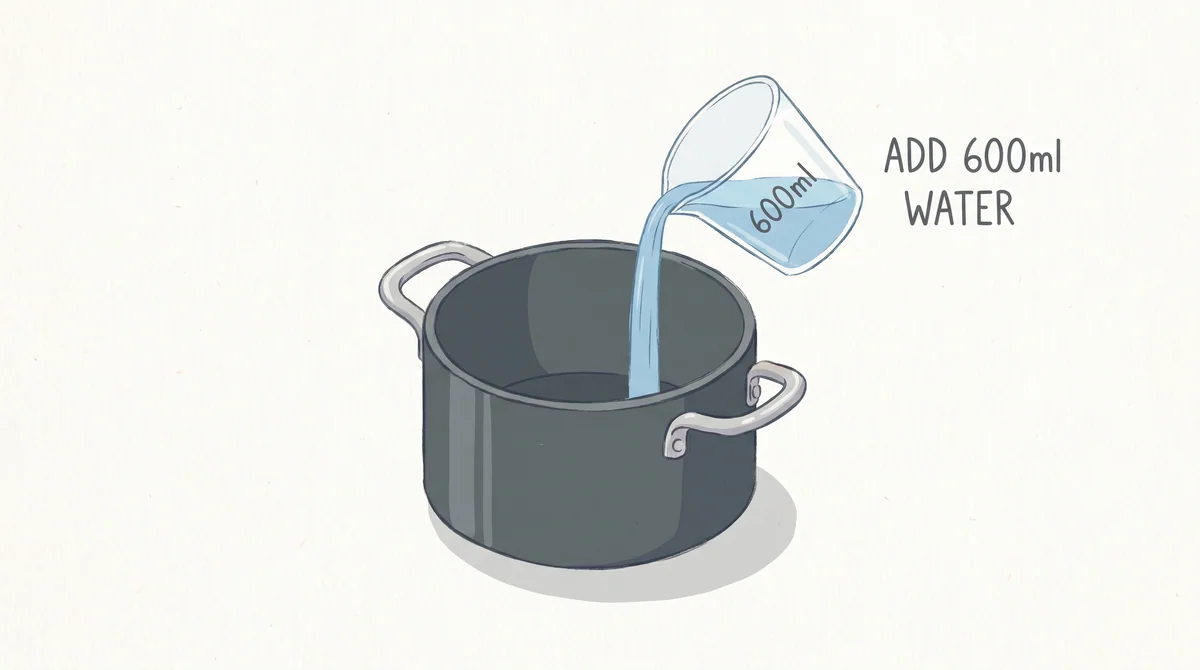
1. Boil 600 ml of water. Slightly more than two and a half US measuring cups. Use a small pot — the noodle brick needs to lie flat.
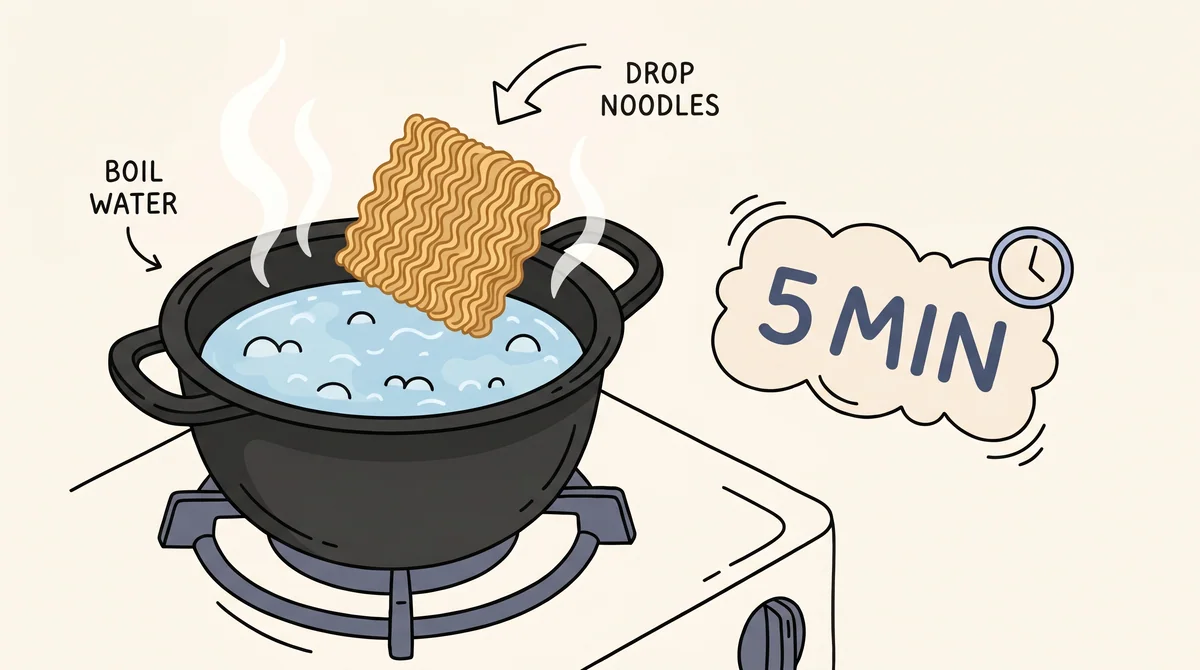
2. Add the noodles. Boil 5 minutes. Stir once at the 2-minute mark to stop the brick sticking to the base.
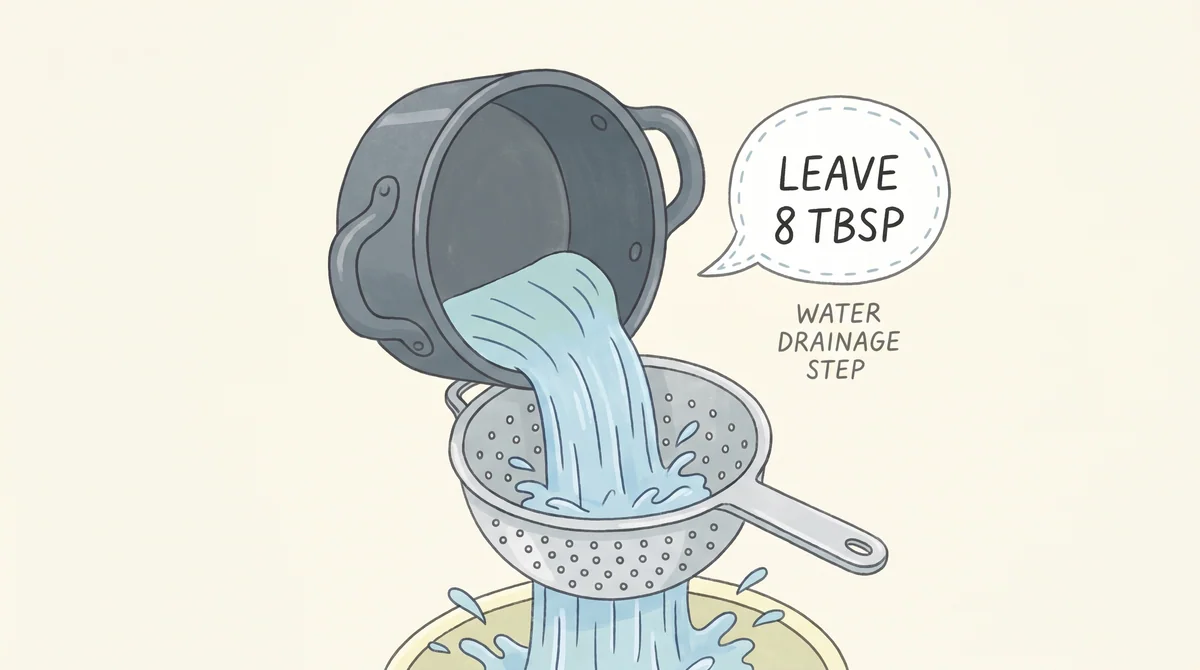
3. Drain — but leave roughly 8 tablespoons of water in the pot. The reserved water becomes the base for the sauce emulsion. This is the step first-timers usually skip, and skipping it is why home-made Buldak ends up drier than the photos on the packet.
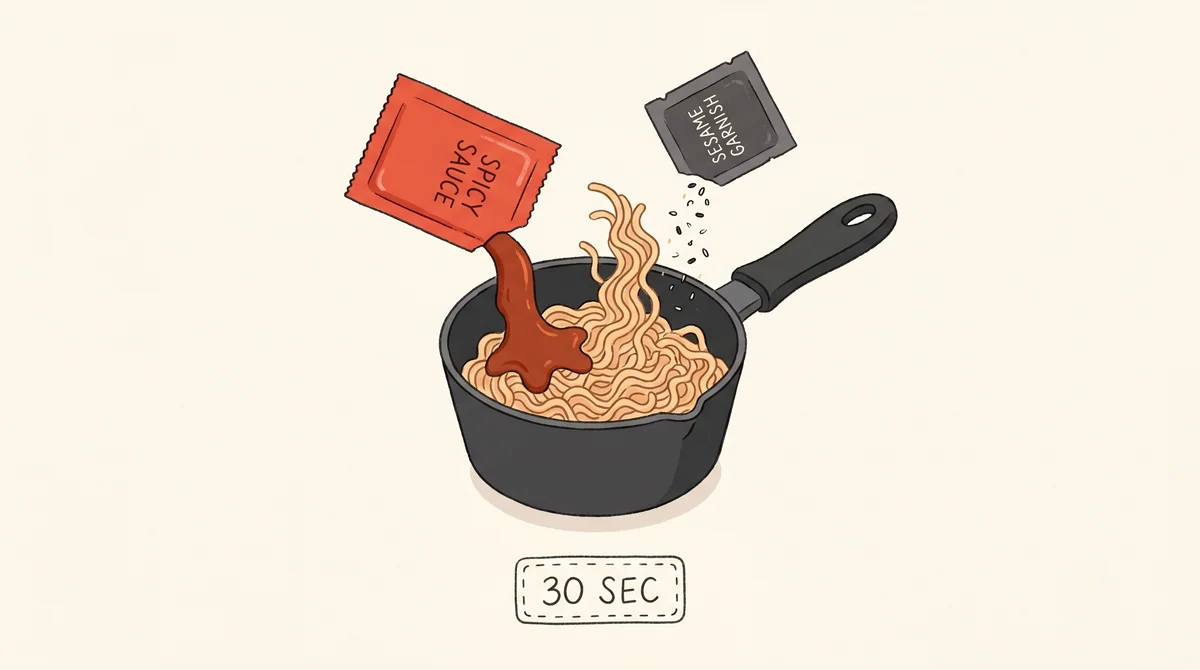
4. Return to low heat. Add the liquid sauce packet and the flake sachet. Stir 30 seconds. The noodles should glaze fire-engine red. Eat directly from the pot, Korean-style, or transfer to a bowl.
Cup Buldak Stir-fry
The single-serving cup format. Smaller portion, no pot needed, slightly different noodle texture because the strands are processed for hot-water-only rehydration.
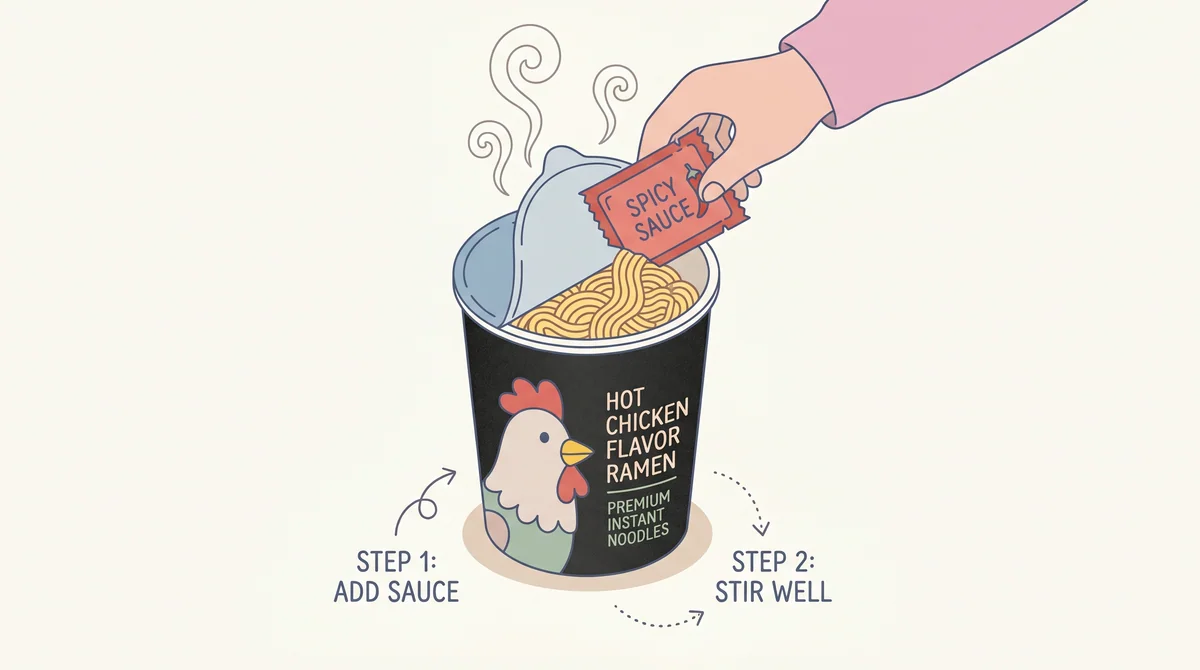
1. Open the lid halfway. Take out the sauce sachet. The sauce melts under boiling water — keep it aside until step 4.
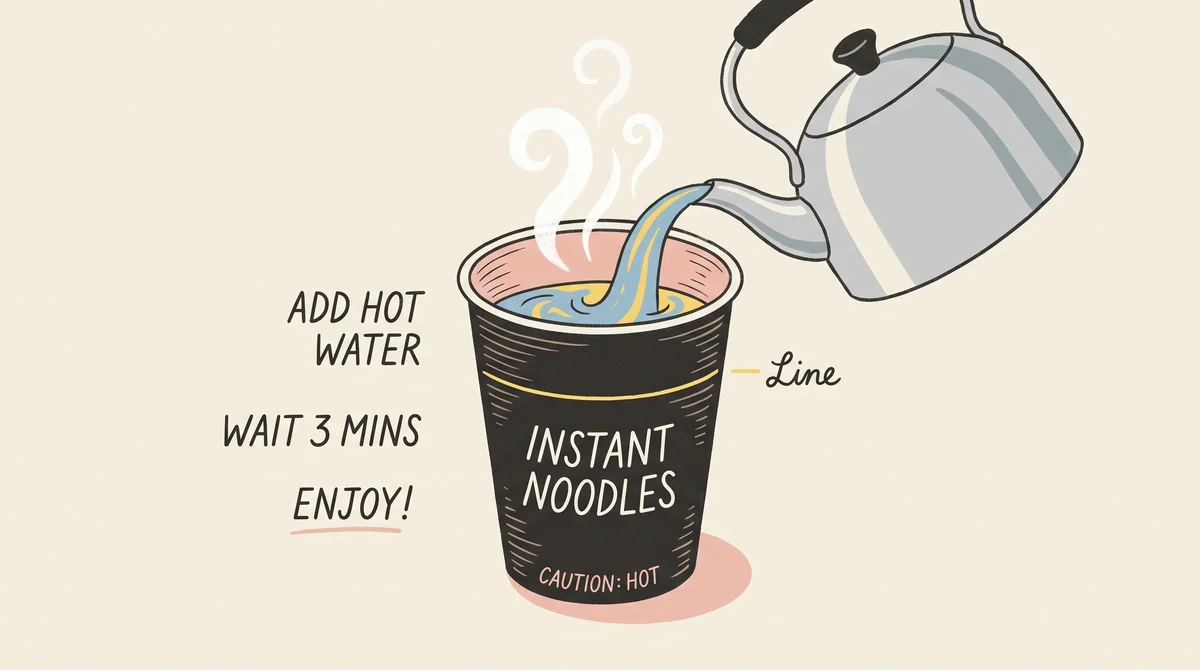
2. Pour boiling water to the marked fill line. The line is printed inside the cup, usually halfway down.
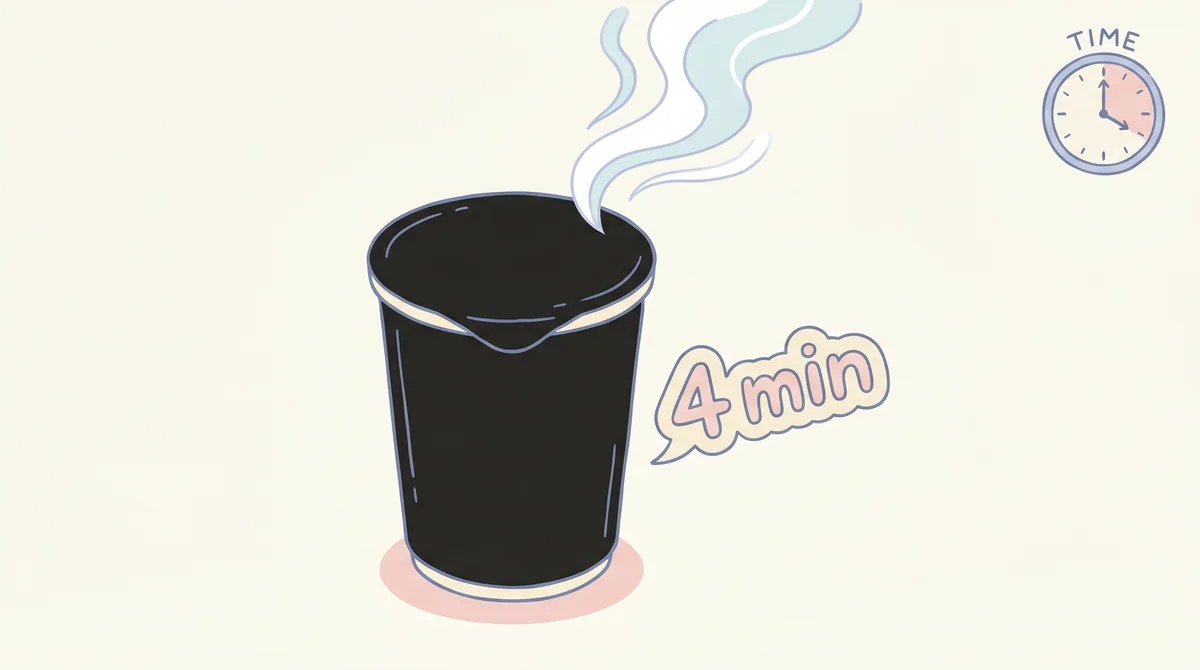
3. Close the lid. Wait 4 minutes.
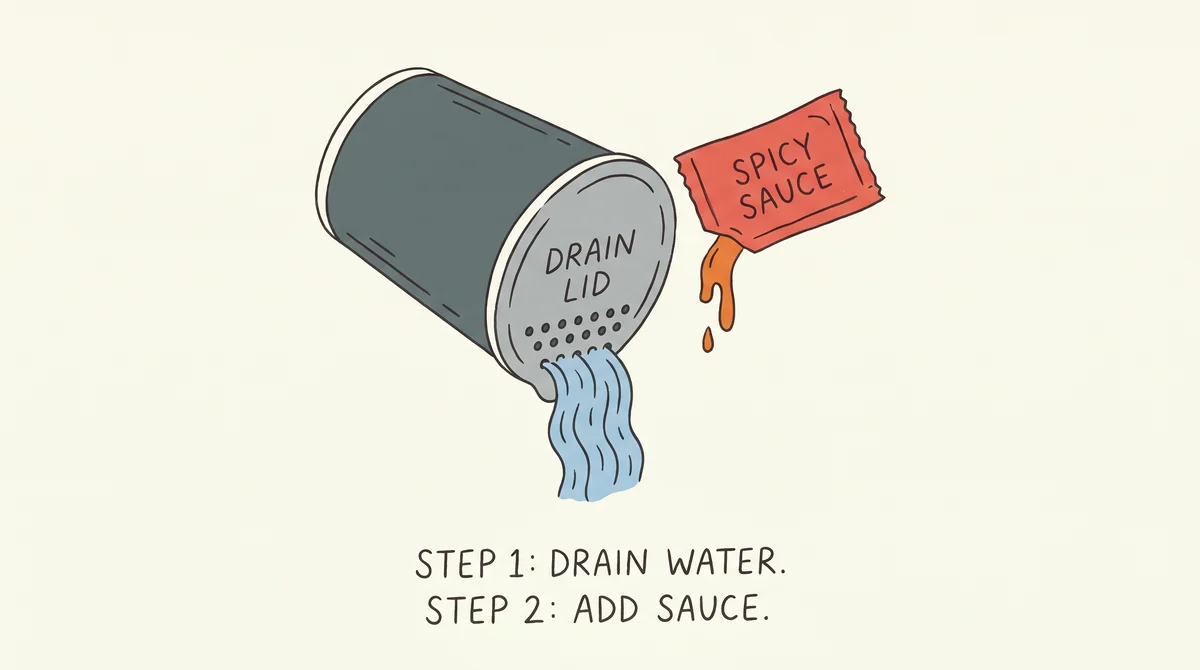
4. Drain through the lid strainer holes. Squeeze in the reserved sauce. Stir. Most Buldak cups have built-in drain perforations along one edge of the lid — that's intentional, not a defect.
Packet Buldak Soup (Buldak Tang Myeon)
The soup variant — a separate product, not a reprep of the original. Korean name: Buldak Tang Myeon (불닭탕면). The seasoning ratio is rebalanced for broth rather than glaze, so this prep can't be substituted by adding extra water to the original.
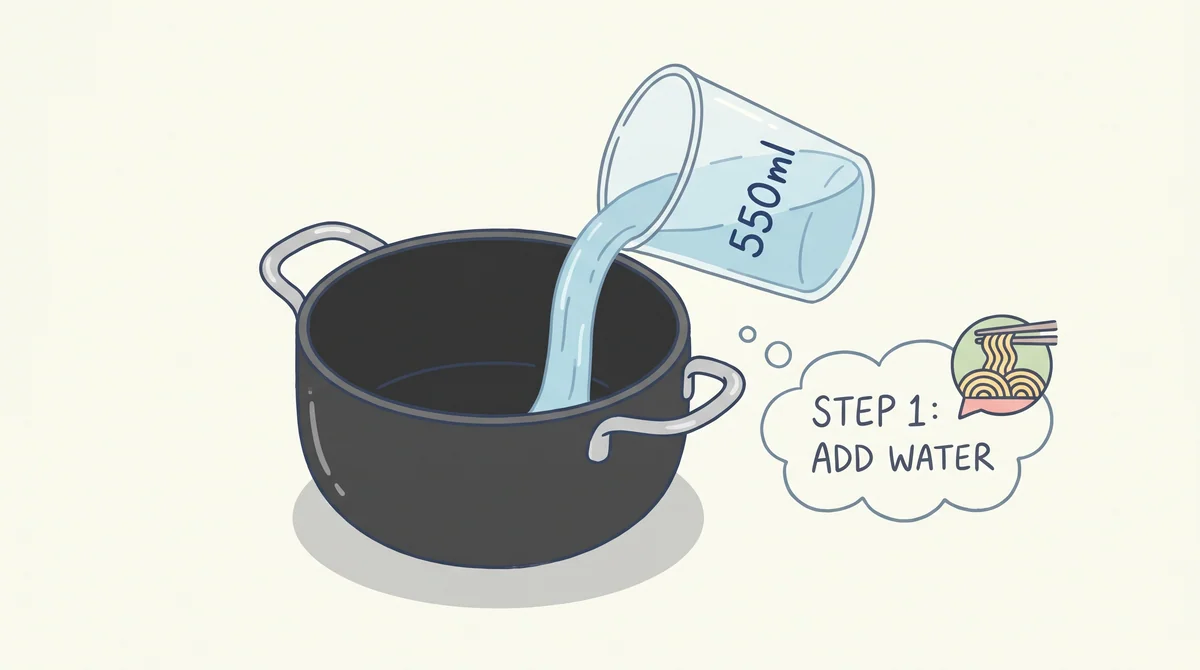
1. Boil 550 ml of water. Slightly less than the stir-fry prep because the broth stays in the bowl.
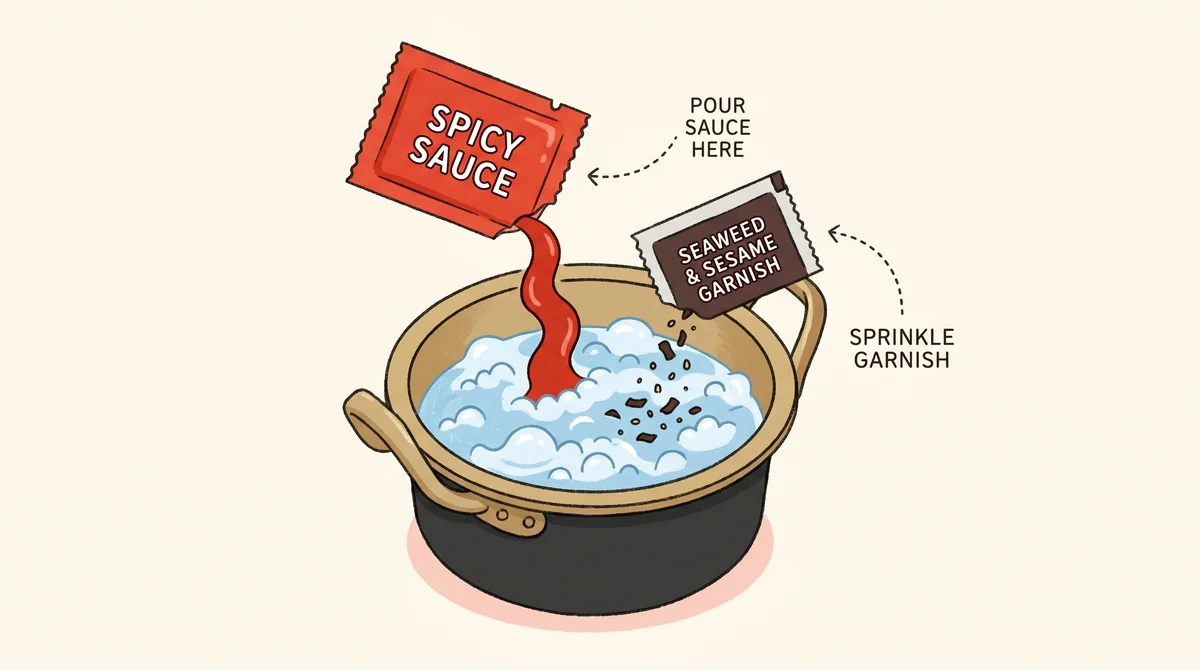
2. Add the sauce and flake packets to the boiling water. Sauce goes in early for the soup version — the opposite order from the stir-fry.
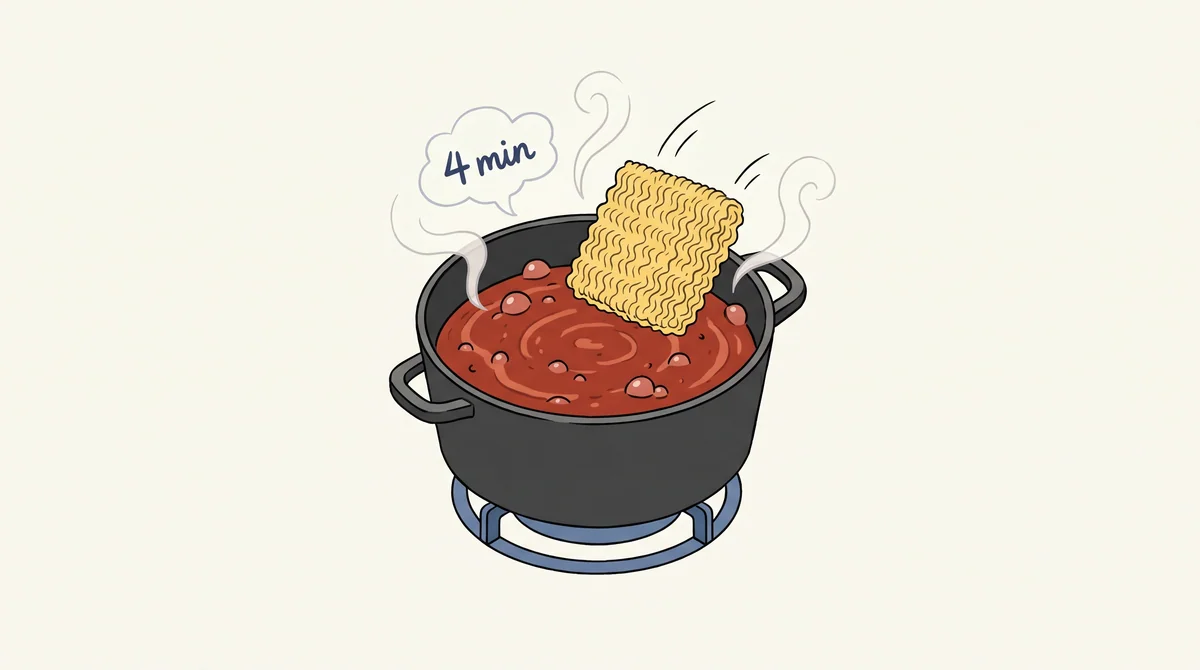
3. Add the noodle brick. Boil 4 minutes.
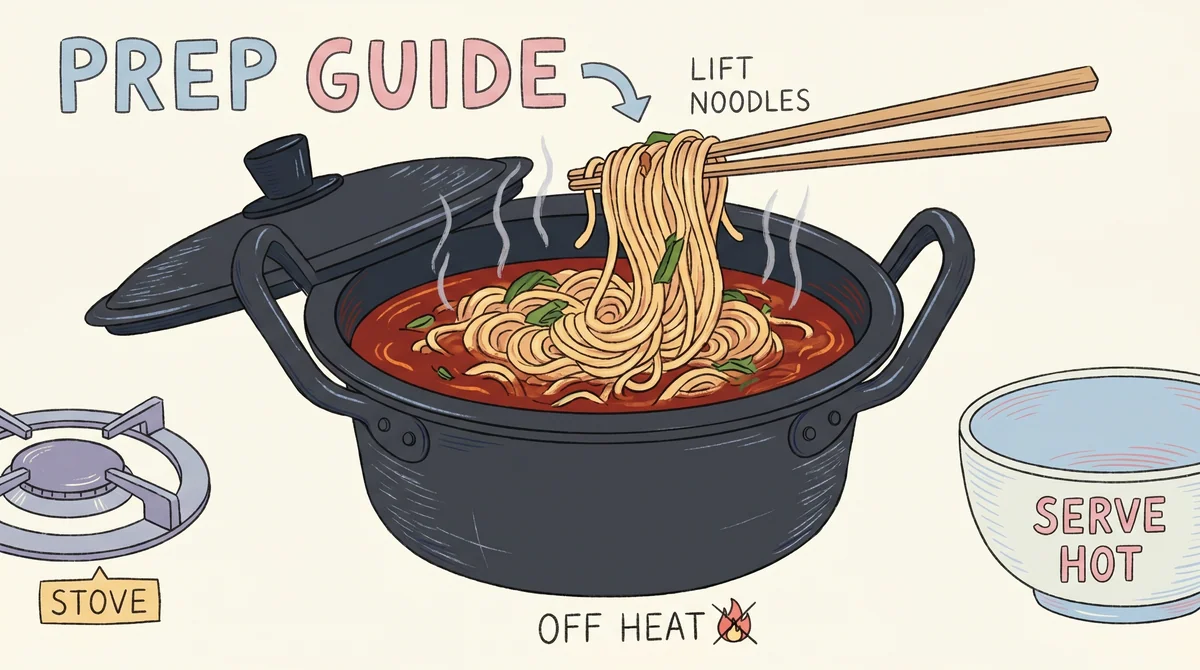
4. Lift off the heat and serve. Chopsticks for the noodles, spoon for the broth.
Cup Buldak Soup — Big Bowl format
The bowl-cup format — wider than the stir-fry cup, designed for broth.
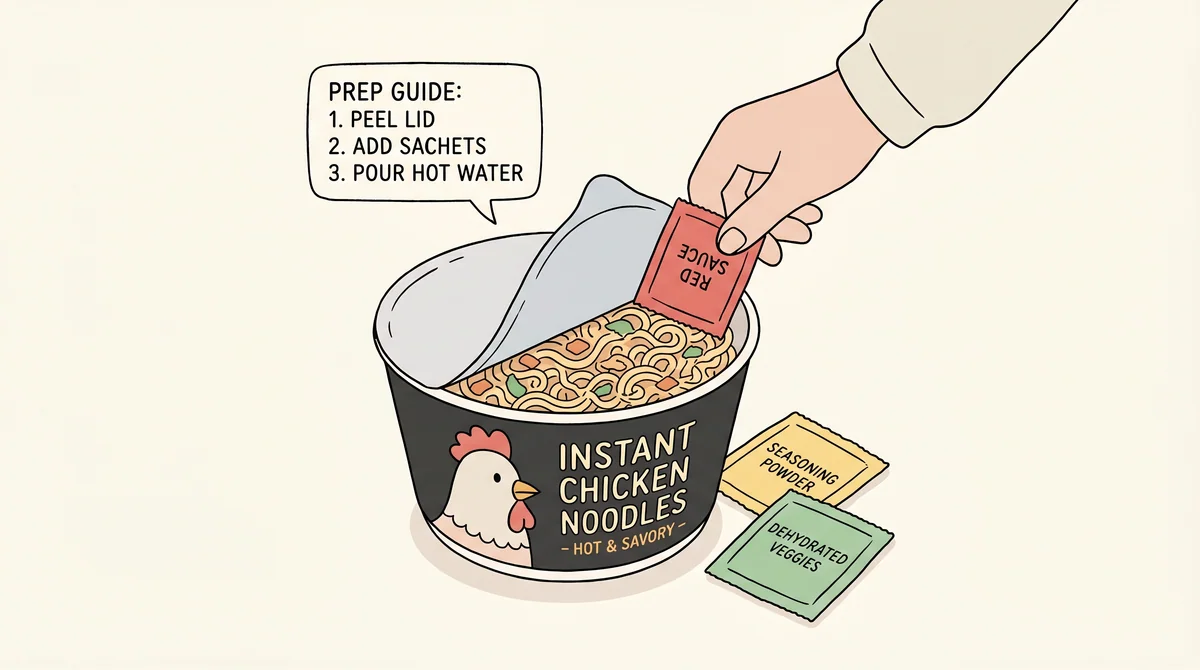
1. Open the lid halfway. Remove the sauce sachet.
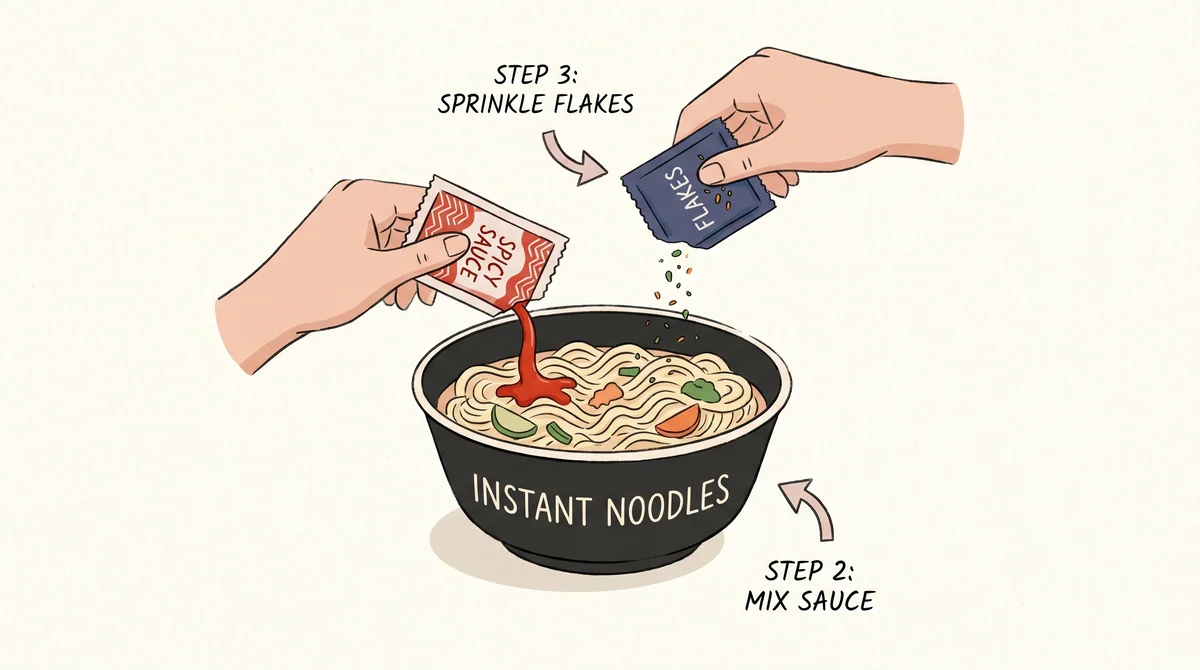
2. Empty the sauce and flake sachets into the cup. Soup format — seasonings stay in, no drain step.
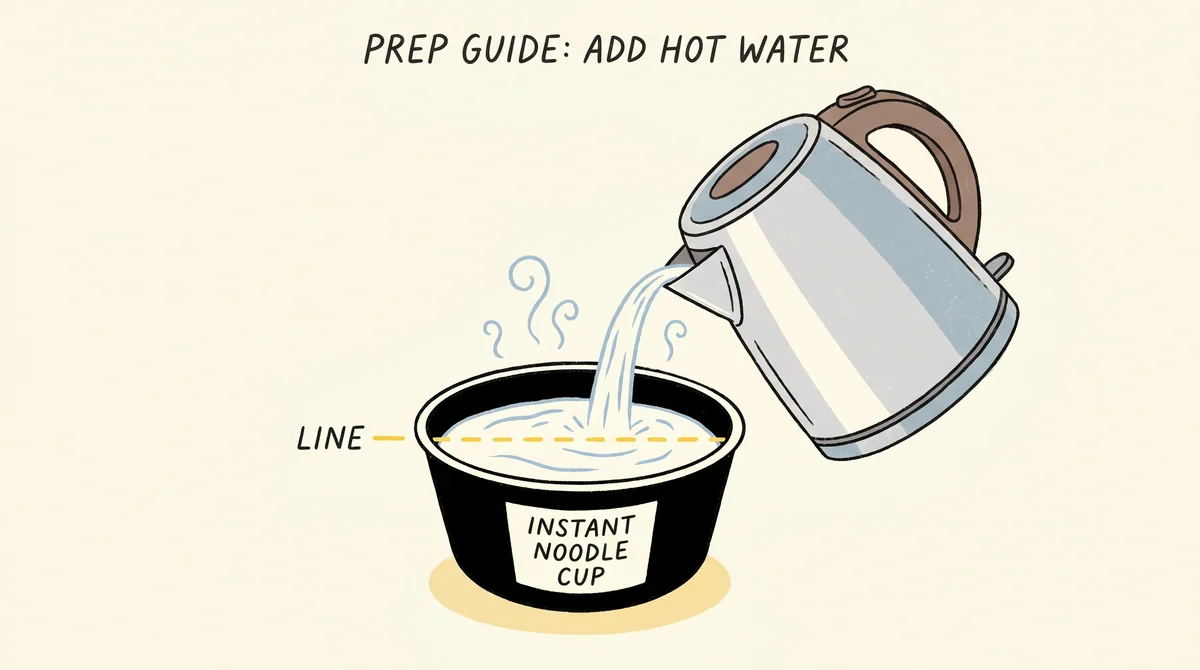
3. Pour boiling water to the marked fill line.
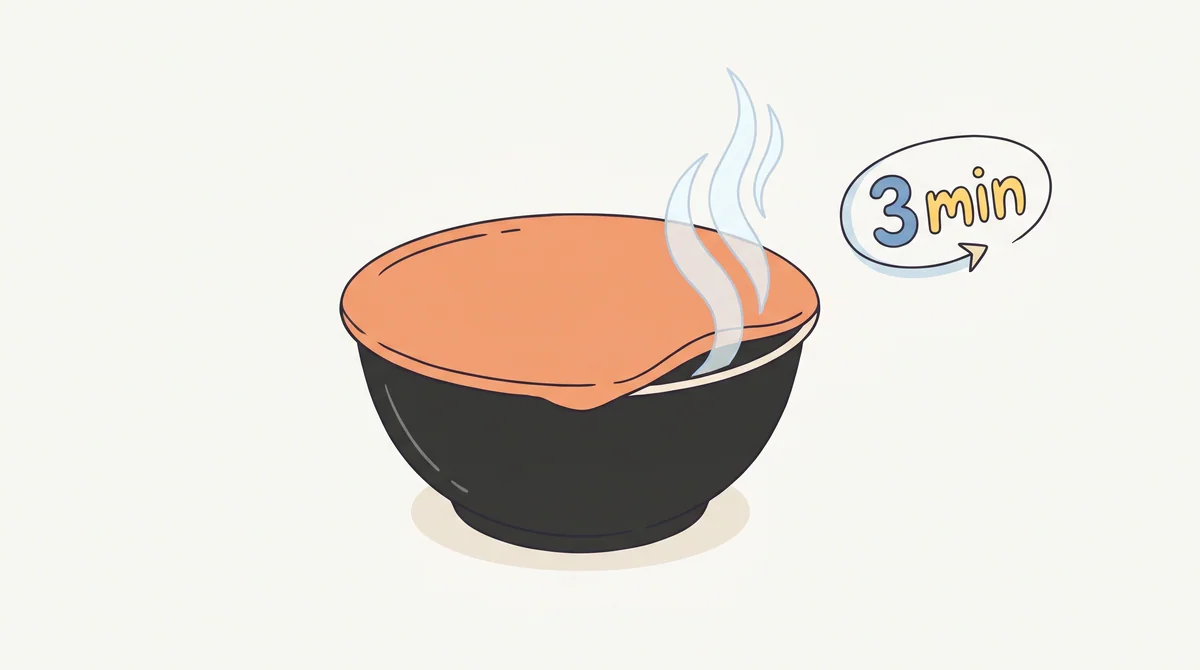
4. Close the lid. Wait 3 minutes. Stir. Eat directly from the cup.
How Koreans actually eat it
The packet instructions are honest manufacturer prep. The Korean home-cooking modifications are not on the packet but are nearly universal in Korean kitchens:
- The cheese drop. A slice of American processed cheese (the yellow single-wrap kind) placed on top in the last 30 seconds of stir-fry — the cheese-Buldak convention. The fat in the cheese mellows the perceived heat without removing it. This is the most common first-time modification when introducing a non-Korean friend to Buldak.
- The egg. A raw egg cracked into the pot at step 4 of the stir-fry, scrambled into the sauce while stirring — closer in spirit to Korean rabokki (spicy rice-cake-and-ramen comfort food). Works for the soup format too.
- The rice finish. Reserve a third of the noodles, then add a scoop of cold rice to the sauce-glazed bottom of the pot in the last minute. The sauce-coated rice eaten at the end is its own course, and it's how most Korean households finish the meal.
- The dairy buffer. A glass of cold milk on the side, not water — capsaicin is fat-soluble, and water spreads the heat across the palate rather than neutralising it.
None of these are on the official prep instructions. All of them are how Buldak is genuinely eaten in Korea.
Where to buy Buldak in the US
Distribution is broader than most US-side fans realize.
- H Mart — every location carries the full Buldak lineup including Korean-domestic-market flavors not on Amazon. Best variety, typical pricing ~$1.79 per single packet.
- 99 Ranch Market — Original, 2x, Carbonara, Cheese, Jjajang reliably. Variants vary by location.
- Costco — the Carbonara variety box (typically 20 packs) appears seasonally; Original 5-packs are stocked in stores with Asian-aisle sections.
- Walmart — Original and Carbonara at most Supercenter locations, in the international foods aisle.
- Target — single packets at many locations; variety is limited.
- Whole Foods — Original only, in the global noodle section. Patchy by location.
- Amazon US — every variant, often in 5-pack or 10-pack bulk. Pricing fluctuates more than at retail; check the per-packet cost before buying. Buldak noodles near me searches usually resolve to H Mart or 99 Ranch in your metro, or Amazon Fresh if you're in NY, LA, Bay Area, Seattle, or Chicago.
For halal kitchens: the Indonesia-distributed Buldak (KMF-certified) is sometimes available through specialty importers like Halal World Depot. The US-stocked product may differ in certification status — check the side-panel halal seal.
How Buldak fits in the global instant-noodle landscape
The instant-noodle world breaks into four cultural tiers. Buldak's position:
- Mass-market American instant (Maruchan, Nissin Top Ramen): cheapest, sold in every US grocery, no aspirations beyond budget calories
- Premium Asian instant (Nongshim Shin Ramyun, Nissin Cup Noodles Premium, Indomie): better noodle, better seasoning, sold in Asian groceries and increasingly mainstream
- Cult/viral instant (Buldak, Samyang variants, Hi-Chew limited drops): identity-driven, social-media-amplified, event purchases not pantry staples
- Restaurant-tier kit format (Ichiran Tonkotsu, Ippudo): packaged restaurant experiences at premium prices
Buldak owns the third tier almost single-handedly. Its closest competitor in viral-instant is its own sibling — Samyang's smaller-volume releases like Habanero Lime Buldak — not a different brand's product. The Korean market has tried to copy the format (Ottogi's Yeolla-Yeolla, Paldo's Volcano variants), and none have approached the global brand recognition Buldak achieved.
This positioning matters for the shopper: if you're buying Buldak for daily eating, you're using the wrong product. Shin Ramyun is the daily Korean instant. Buldak is the weekend, the dare, the social-media moment, or the I want fire tonight purchase. Treat it that way and the value proposition holds up.
FAQ
What does buldak mean? Literally fire chicken in Korean — bul (fire) + dak (chicken). The name comes from a spicy braised-chicken dish popular in Seoul restaurants in the late 2000s, which inspired Samyang's product line. The full product name is Buldak-bokkeum-myeon, meaning fire-chicken stir-fried noodle.
How spicy are Buldak noodles, really? The original Buldak Hot Chicken sits at 4,404 SHU — about the heat of a hot Tabasco sauce or a low-end jalapeño. The 2x Spicy (black bag) version reaches roughly 8,706 SHU, near the upper end of jalapeño range. Not in habanero territory, but the sauce concentration plus the full-packet serving size makes the perceived heat punishing.
Can Buldak noodles actually kill you? No — there is no clinical case of a healthy adult dying from eating Buldak as instructed. The capsaicin dose in a single packet is well below acute toxicity thresholds. For people with cardiovascular conditions, severe acid reflux, or capsaicin sensitivity, the heat can trigger genuine distress — but the noodles themselves are not toxic.
What's the difference between the pink, black, and yellow Buldak bags? Pink = Carbonara (creamy cheese-and-pepper, launched March 2017). Black = either 2x Spicy or Jjajang depending on the front label — read carefully. Yellow = Cheese, a 2014 variant that adds dehydrated cheddar-style powder to mellow the heat. All four use the same noodle base; the seasoning packets are what change.
Are Buldak noodles halal? Some variants are halal-certified, others aren't — check the packet. The export versions sold in Indonesia, Malaysia, and the Gulf region are typically halal-certified by KMF (Korea Muslim Federation). The US-distributed version may differ from the Indonesian or Saudi-market version even when the front of the pack looks identical.
Where do Buldak noodles fit in the global instant ramen world? Buldak sits in the premium-instant + viral-product tier — the same category as Nissin's Cup Noodles and Indomie Mi Goreng. What makes it distinct: the stir-fry (drained, not soup) format, the Scoville-as-marketing positioning, and the social-media-driven brand identity. Treat it as an event product, not a daily ramen.