How to Cook Rice Noodles — The Right Method for Every Shape
Soak vs boil, timing per shape, and the technique tricks that separate a good bowl of rice noodles from a clumped, gummy mess.

Rice noodles look forgiving and aren't. Treat them like wheat pasta — into a rolling boil, salt the water, drain when al dente — and they come out gummy, snapped, and clumped together in a single starchy mass. The fix is simple once you understand the rule: the right method depends on the shape, not the package directions. Wide flat noodles cold-soak. Thin vermicelli hot-soaks. Only the thinnest strands tolerate an active boil. Here's the full breakdown.
TL;DR — the three methods, matched to shape
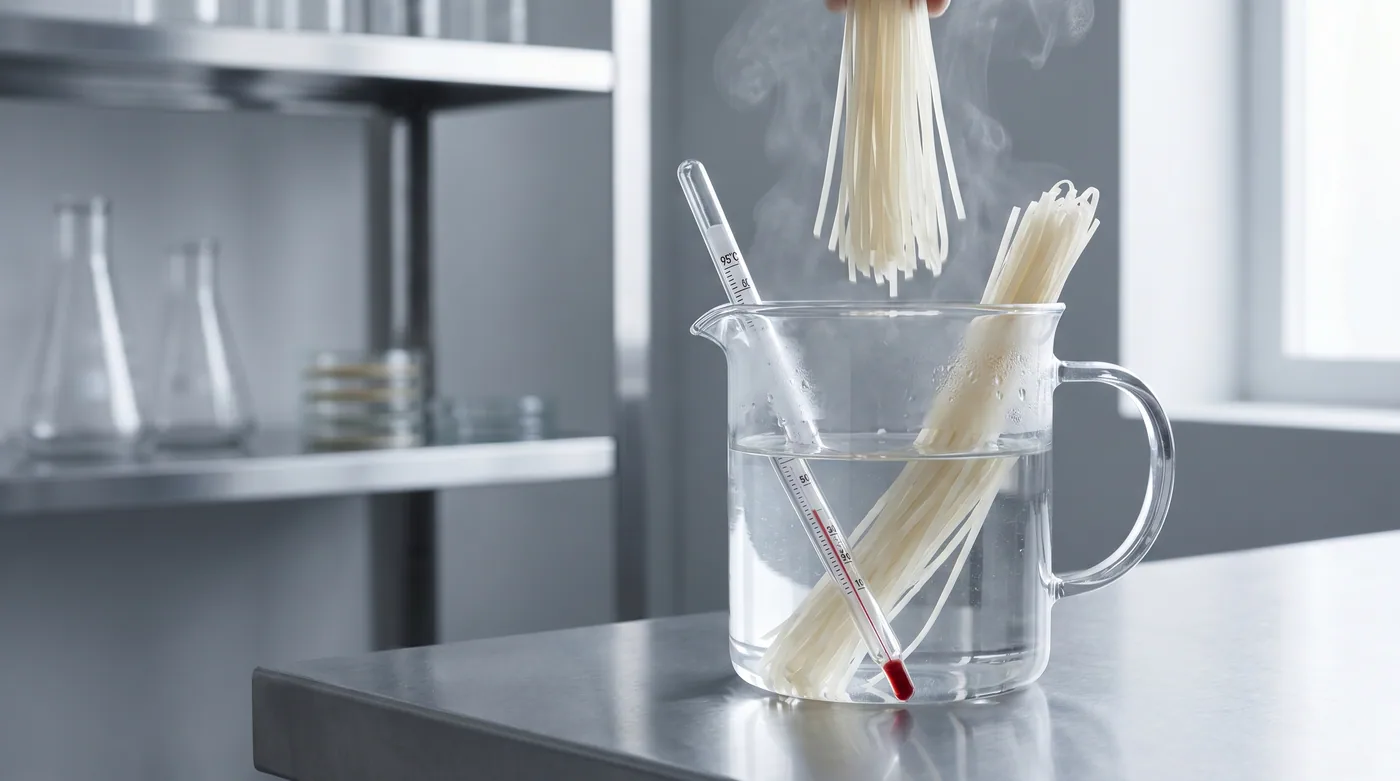
Cold soak (30-45 minutes in room-temperature water). The default for any dried rice noodle wider than 3mm — pad thai noodles, sen yai stir-fry noodles, bánh phở rice sticks. The cold soak hydrates the strand without over-gelatinizing the surface starch, leaving the noodle pliable enough to bend but firm enough to survive a wok or a finishing simmer.
Hot soak (3-8 minutes off the heat in just-boiled water). The default for thin rice vermicelli — both Vietnamese bún and Thai sen mee. Boil the water, kill the heat, drop the noodles in, set a timer. They finish on residual heat without ever taking a rolling boil.
Active boil (1-3 minutes in rolling water). Reserved for the thinnest dried rice strands and for finishing noodles that were already cold-soaked. Almost never the full cooking method on its own.
If you only remember one thing from this page: dried rice noodles wider than 3mm should never see a rolling boil for their full cook. The cold soak does the work. The wok or the broth finishes them.
The three methods, in detail
Cold soak — the most-used technique
Drop the dried noodles into a bowl of room-temperature tap water. Submerge them fully — weight them with a plate if they float. Walk away for 30 to 45 minutes depending on thickness.
The right finishing texture: pliable enough to wrap around your finger, firm enough that a strand still has visible structure when you bend it. Slightly underdone is correct, because the noodle keeps hydrating after it leaves the water and finishes in the wok or the bowl.
This is the standard method for pad thai (sen lek, ~5mm), pad see ew and drunken noodles (sen yai, ~10mm), and most Vietnamese stir-fry applications using dried bánh phở sticks. It's also the right starting point for bánh phở rice sticks used in pho soup — cold-soak first, then a 60-90 second finish in hot water or broth right before serving.
Hot soak — for vermicelli and the thinnest shapes
Boil a kettle. Pour the boiling water over the dried noodles in a heat-safe bowl. Kill the heat completely — no stove flame underneath. Set a timer.
- Rice vermicelli (~1mm), dried: 3 to 5 minutes
- Slightly thicker vermicelli (~2mm), dried: 5 to 7 minutes
- Fresh vermicelli: 30 to 60 seconds, just to warm through
Stir gently once at the start to keep the strands from bonding into a brick. Drain into a colander, rinse briefly under cold water to halt cooking and wash off surface starch, drain again. For salads (Vietnamese bún chả, Thai yum woon sen-style preparations), serve at room temperature. For soup, drop the drained portion into the hot broth at the moment of serving.
Active boil — the narrow use case
A rolling boil is the right method for two situations only. First, the thinnest dried rice strands meant for soup garnish (some Chinese rice noodle styles, certain instant rice noodle products) — these tolerate 1 to 3 minutes of active boil because they're already thin enough to hydrate fast and starch-light enough not to gum up the pot. Second, as a finishing step for cold-soaked noodles being plated into hot broth.
In both cases, water-to-noodle ratio matters: a generous pot (6 cups of water per 4 ounces of dried noodle) keeps the starch dilute. A small pot turns the cooking water into glue, which then coats the strands as you drain.
Timing chart by shape
| Shape | Width | Dried or fresh | Method | Time |
|---|---|---|---|---|
| Rice vermicelli (bún, sen mee) | ~1mm | Dried | Hot soak | 3-5 min |
| Bánh phở rice sticks (for pho) | ~3mm | Dried | Cold soak, then finish | 30 min soak + 60-90 sec in hot broth |
| Sen lek (pad thai noodles) | ~5mm | Dried | Cold soak, finish in wok | 30 min soak + 60-90 sec stir-fry |
| Sen yai (wide stir-fry noodles) | ~10mm | Dried | Cold soak, finish in wok | 45 min soak + 60-90 sec stir-fry |
| Fresh he fen / ho fun (wide) | ~10mm | Fresh | No soak — gentle separation | 1-2 min in wok |
| Fresh rice vermicelli | ~1mm | Fresh | Warm through only | 30-60 sec |
| Thin dried rice stick (Chinese mi fen) | ~2mm | Dried | Hot soak or brief boil | 5-7 min hot soak, or 2-3 min boil |
Read the package, then ignore the package. Manufacturer directions tend to default to "boil 6-8 minutes," which is wrong for everything wider than vermicelli. Use the shape-and-width chart instead.
The package says boil. The technique says soak. The technique wins.
For pho specifically
Pho noodles are dried bánh phở rice sticks — flat, around 3mm wide, sold in 16-ounce bags labeled bánh phở, banh pho, or sometimes just "rice sticks for pho." The cooking sequence is intentional, and the timing is built around plating.
Cold-soak the dried noodles in room-temperature water for 30 minutes while the broth simmers. (Many cooks start the soak when the broth has 30 minutes left.) Drain when the strands bend without snapping.
Right before serving, bring a separate pot of plain water to a hard boil, or work directly with the simmering broth. Drop the drained noodles into the hot liquid for 60 to 90 seconds — no longer. Use a wire basket or a small mesh strainer to handle them as a portion, not as a tangle. Lift, drain hard, transfer to the serving bowl. Top with the cooked or rare-sliced beef, the aromatics, the herbs, then ladle the hot broth over the assembled bowl.
The bowl-assembly order matters. Noodles first, raw garnishes on top, hot broth poured last — the broth cooks the rare beef and wilts the herbs as it hits the bowl. If you portion the broth in first and then drop the noodles, the noodles overcook in the bowl and the assembly loses the layered temperature contrast that makes pho work as a finished dish.
For more on the broth side and the regional Hanoi/Saigon split, see the full pho type guide.
For pad thai specifically
Pad thai is the canonical case for why you don't pre-boil rice noodles. The dish is built around 90 seconds in a screaming-hot wok with the tamarind-fish sauce-palm sugar sauce, the egg, the protein, and the noodles all coming together at once. Pre-boiled noodles arrive at the wok already fully hydrated and structurally fragile — they break under the toss and disintegrate into the sauce, producing a wet, mushy plate instead of distinct slick strands.
The right method: cold-soak the sen lek (pad thai-width, ~5mm dried rice noodles) for 30 minutes in room-temperature water. Drain in a colander, shake off excess water, but don't rinse — surface moisture helps them hydrate the final 10% in the wok. They should still be slightly firm and visibly opaque-white in the center when you drain them. That's correct.
When the wok is ready, add the soaked-and-drained noodles directly with the sauce. They'll go from pale-opaque to translucent-glossy in 60 to 90 seconds as the sauce cooks down and finishes the hydration. The wok does the last quarter of the cook. The noodles arrive at the plate at exactly the right texture — pliable, slick, distinct strands that pick up the sauce instead of dissolving into it.
For the buying side — which brands and weights to actually look for — see Best Pad Thai Noodles, and for the dish itself, the pad thai type guide.
For stir-fries in general
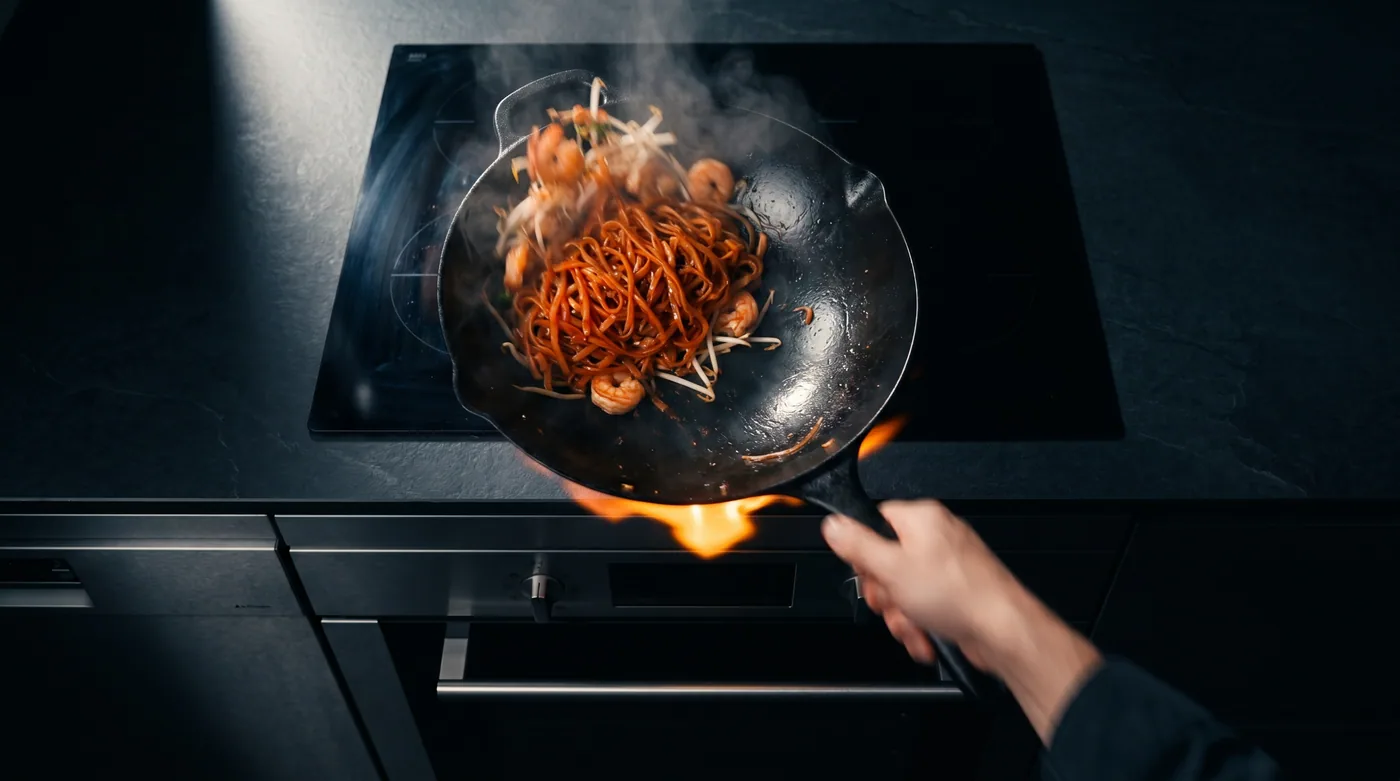
The principle generalizes. Any wok dish with rice noodles — pad see ew, drunken noodles (pad kee mao), beef chow fun, char kway teow — uses the same cold-soak-then-wok sequence. Never boil rice noodles for stir-fry.
A few additions for high-heat work:
- Drain hard. Wet noodles steam-cool the wok, kill the sear on whatever's already in there, and produce a stewed plate instead of a stir-fried one.
- Don't overcrowd. A 14-inch wok holds about 6 ounces of soaked rice noodles per round before it starts steaming. Cook in batches if you're feeding more than two.
- Add the noodles after the aromatics, before the sauce. Garlic and shallot first, then noodles to pick up the fond, then sauce to glaze and finish.
- Toss with chopsticks or tongs, not a spatula. A spatula pushes; chopsticks lift. Lifting prevents the noodles from breaking on the wok surface.
The seven most common mistakes
- Boiling instead of soaking. The single biggest error. Anything wider than vermicelli should cold-soak first.
- Over-soaking. A fully-soft soaked noodle is already overcooked before it gets to the heat. Underdone-by-touch is correct.
- Skipping the rinse on hot-soaked vermicelli. The starch coating bonds the strands as they cool. A cold-water rinse and a hard drain prevent the clump.
- Using the wrong width for the dish. Pad thai is sen lek (5mm), not sen mee (vermicelli) and not sen yai (wide). Pho is 3mm rice sticks, not vermicelli. Substituting widths produces a dish that doesn't read right.
- Pre-cooking too far in advance. Cooked rice noodles bond as they cool. Soak right before service; finish in the dish at the moment of plating.
- Not separating frozen or refrigerated fresh rice noodles before they hit the heat. Fresh he fen ships folded; the folds need to be pulled apart by hand under warm tap water before they touch the wok.
- Overcrowding the wok with wet noodles. Too much water-weight at once steams instead of sears. Drain hard, then cook in batches.
How to rescue clumped or gummy noodles
It happens. Soaked too long, boiled when they should have been soaked, prepped too far ahead — the result is a single starchy brick.
The rescue:
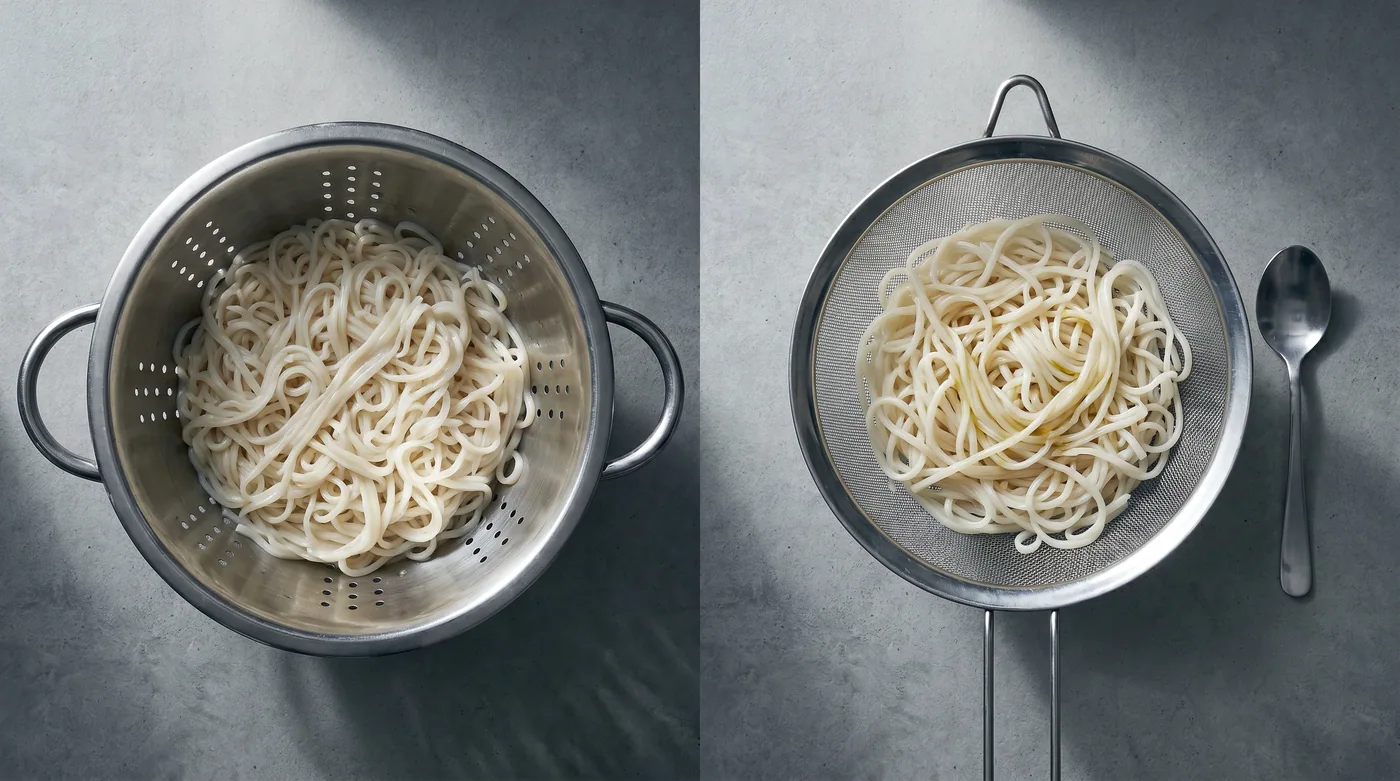
- Rinse under cold running water in a colander, breaking the clump with your hands or chopsticks. The cold water washes off the surface starch that's gluing strands together.
- Drain hard — really shake out the colander. Wet rice noodles never recover from being stir-fried wet.
- Toss with a teaspoon of neutral oil (vegetable, canola, or peanut). Coat every strand. The oil keeps them separate while you stage the rest of the dish.
- Finish in sauce, not in water. Re-adding water at this stage makes the gumminess worse. Get them into the wok with the sauce, or into the bowl with the hot broth, immediately.
The rescue works on slightly overcooked noodles. It does not work on fully blown-out noodles — strands that have lost structural integrity and shred under chopsticks are unrecoverable. Save them for a noodle pancake or start over.
Storage
Uncooked dried rice noodles keep in the pantry for 12 months or longer in a sealed bag or airtight container. They're shelf-stable and forgiving. Buy a brick when you see a brand you like; it'll outlast most of what's in the cupboard.
Fresh refrigerated rice noodles (he fen, fresh vermicelli, fresh rice sheets) need to be used within 5 days of opening. They dry out and crack as they age. Keep them in the original packaging, sealed, in the warmest part of the fridge (not the back wall — fresh rice noodles bruise in deep cold).
Cooked rice noodles are the hardest to store. The honest recommendation is to cook them to order. If you must hold them — for a buffet, for staggered family dinner timing — toss with a teaspoon of neutral oil, cover loosely, hold at room temperature for up to two hours. Past one day in the fridge they turn into a hard brittle clump that doesn't fully revive on reheating. The texture loss is irreversible.
For more on the broader category — the wheat-vs-rice distinction, regional shape names, what each width is actually called in Vietnam, Thailand, and southern China — see Rice Noodles Explained.
FAQ
Should you soak or boil rice noodles? Both, depending on shape. Wide flat noodles cold-soak. Thin vermicelli hot-soaks off the heat. Only the thinnest dried strands tolerate an active boil.
How long do you cook rice noodles? Vermicelli (~1mm) hot-soaks 3-5 minutes. Pad thai noodles (~5mm) cold-soak 30 minutes plus a 60-second wok finish. Wide sen yai (~10mm) cold-soaks 45 minutes plus a brief stir-fry. Bánh phở (3mm) cold-soaks 30 minutes plus 60-90 seconds in hot broth.
How do you cook rice noodles for stir fry without them breaking? Cold-soak, never boil. Drain hard. Add straight to the hot wok with the sauce; finish in 60-90 seconds.
Why are my rice noodles clumping? You probably boiled when you should have soaked, over-soaked, or cooked too far ahead. Rinse under cold water, drain hard, toss with a teaspoon of neutral oil.
Can you cook rice noodles directly in broth? Only as a brief finish — 60-90 seconds for already-soaked bánh phở. Full hydration in broth turns the broth cloudy and gluey.
How do you store cooked rice noodles? Don't, if you can help it. Cook to order. If you must hold, toss with oil and keep at room temperature for up to two hours.
Read Next
- Rice Noodles Explained — the full category guide
- Pho — type guide
- Pad Thai — type guide
- Best Pho Noodles & Kits
- Best Pad Thai Noodles