Best Egg Noodles in 2026 — From Reames Frozen to Pennsylvania Dutch
Reames frozen homestyle, Pennsylvania Dutch, No Yolks, and Hakubaku organic — the four US egg-noodle brands worth buying, ranked for stroganoff, soup, and Chinese stir-fry.
This section contains affiliate links. We may earn a commission at no extra cost to you.
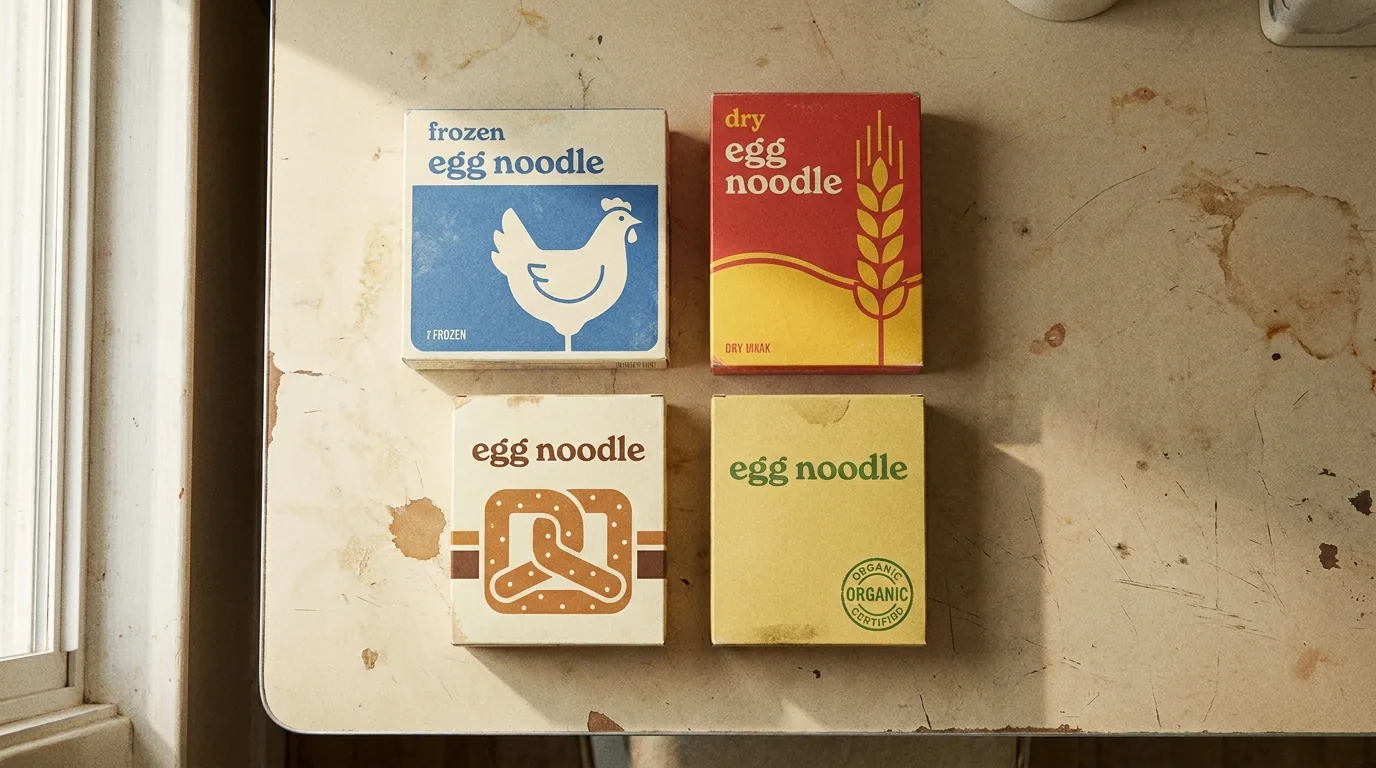
Egg noodles in the US split into four jobs: Reames frozen for stroganoff and chicken-noodle soup, Pennsylvania Dutch for the shelf-stable budget version, No Yolks for low-cholesterol diets, and Hakubaku organic for Chinese stir-fry and lo mein. One product does not cover all four. Here's the buy plan.
How We Pick
- Cross-recipe usability. A buying guide for egg noodles has to answer for chicken-noodle soup, beef stroganoff, Pennsylvania Dutch buttered noodles, and Chinese lo mein — not just one dish. The category splits hard between Midwestern frozen-and-dry comfort noodles and Chinese-style alkaline egg noodles for the wok, and the right pick depends on which job you're hiring it for.
- US grocery distribution. Reames and Pennsylvania Dutch are stocked at most Kroger, Walmart, Hy-Vee, Safeway, and Albertsons locations. No Yolks sits next to them in the dry-pasta aisle. Hakubaku lives at Whole Foods and on Amazon. We scored down anything that requires a special-order trip or unreliable shipping.
- Price per pound. Pennsylvania Dutch lands under $4 per 16-oz bag in the 4-pack; Reames runs roughly $5.99 per 12-oz bag at retail, more on Amazon because of the frozen surcharge. Hakubaku and No Yolks both sit in the $$ tier.
- Ingredient list cleanliness. Wheat flour, eggs, water, salt — anything else is filler. US enrichment vitamins (niacin, iron, thiamine, riboflavin, folic acid) are standard and don't count against the noodle.
- Country of origin and brand provenance. Iowa for Reames, Pennsylvania for Penn Dutch, the US for No Yolks, Tokushima Japan for Hakubaku. All four are real noodle regions with traceable production. Cons are real — if a brand is wrong for a specific use case, we name it.
The Top Pick: Reames Homestyle Frozen Egg Noodles
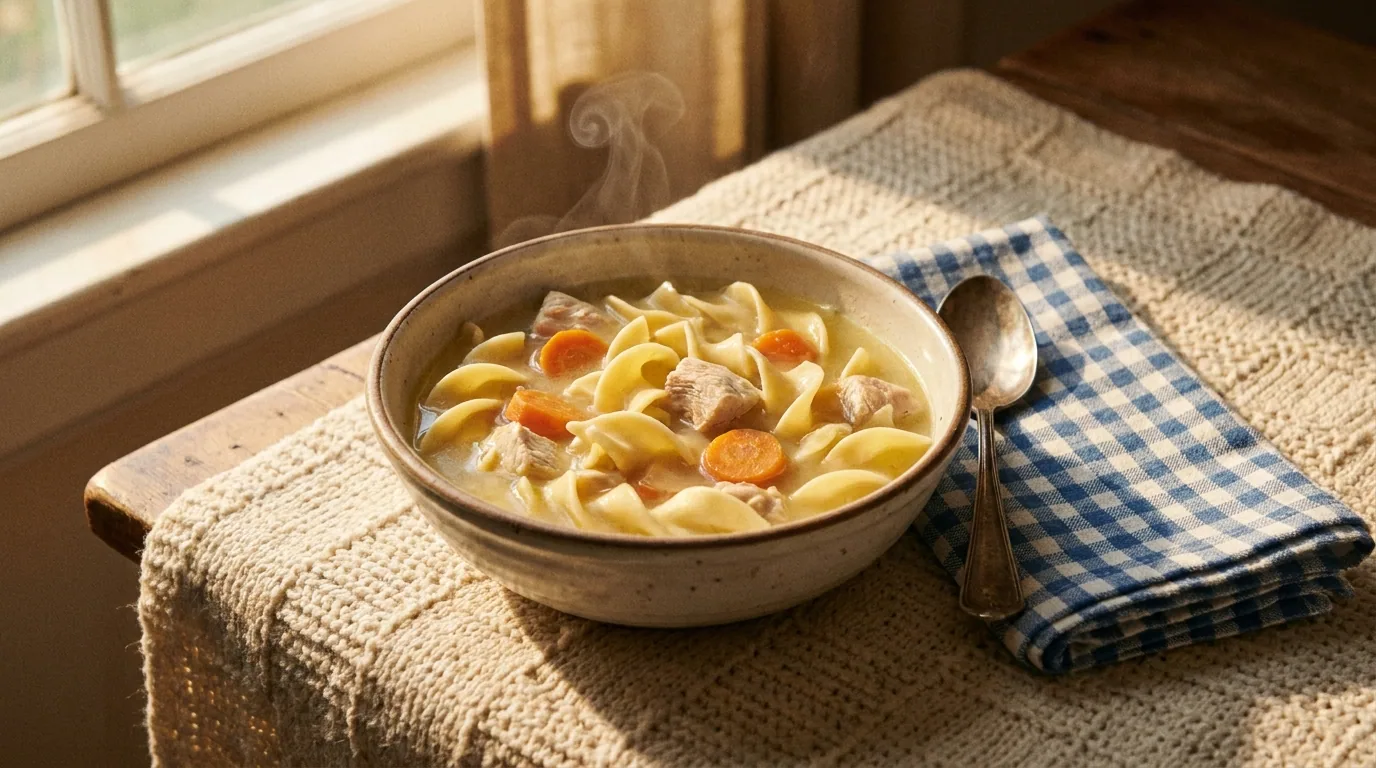
Beulah Reames started the Iowa company in 1949 specifically to make frozen egg noodles that matched her grandmother's homemade. The product has barely changed in 75 years. The dough — wheat flour, whole eggs, water, salt — gets rolled, cut into wide ribbons, and flash-frozen. Pull a 12-oz bag out of the freezer, drop the noodles directly into boiling water or broth, and cook for 20 minutes. That's longer than any dry pasta on the market because the noodles are thicker and absorb more water.
The texture is the differentiator. Reames noodles cook up substantial — almost dumpling-adjacent — with the chew of fresh-rolled dough and the eggy depth of a higher yolk content. In chicken-noodle soup, they swell and soak up the broth without going to mush. In beef stroganoff, they hold their bite under a heavy sour-cream sauce for the full braise. For Pennsylvania Dutch buttered noodles — drained, tossed with butter, salt, and parsley — they're the closest mass-market product to homemade.
Distribution is mostly Midwest and national chains. Walmart, Hy-Vee, Kroger, and Meijer carry them in the freezer aisle alongside ravioli and tortellini, usually around $5.99 for a 12-oz bag at retail. Amazon Fresh and Amazon Pantry stock them in select metros for closer to $7.50 a bag, and the 4-pack runs roughly $30. The catch is the frozen format — no shelf-stable backup, no impulse-buy at a corner grocery, and shipping costs eat into the price advantage in non-Reames metros.
Reames noodles cook up substantial — almost dumpling-adjacent — with the chew of fresh-rolled dough and the eggy depth of a higher yolk content.
Best Budget: Pennsylvania Dutch Wide Egg Noodles
Pennsylvania Dutch is the grocery-aisle default. New Mill Holdings owns the brand now and produces the noodles in Pennsylvania, but the recipe traces back to the Pennsylvania German farming communities that turned wide-cut egg noodles into a comfort-food anchor in the 18th and 19th centuries — buttered noodles, chicken pot pie filling, and brothy noodle soups all built on this exact cut.
A 16-oz bag runs around $3.75 in the 4-pack, which puts the per-pound price under a third of Reames. The noodles cook in 6-8 minutes from dry, drain cleanly, and hold their wide-flat shape without curling. The ingredient list is short — semolina, durum flour, whole eggs, niacin, iron, thiamine, riboflavin, folic acid — though the egg content is lower than Reames, so the noodles read less rich on the palate.
For weeknight stroganoff or a quick chicken-noodle soup when there's no Reames in the freezer, Pennsylvania Dutch is the right buy. It's also the only egg noodle on this list that ships dry, multipack, and shelf-stable from Amazon without freight surcharges. Where it falls short: any Chinese stir-fry — the wide flat cut goes flabby in a hot wok and the dough doesn't have the alkaline bite Chinese egg noodles need.
Three cut widths are commonly stocked under the Penn Dutch label — wide (the default for stroganoff), extra-wide (closer to pappardelle), and kluski (a thicker, irregular noodle modeled on the Polish dumpling-noodle). The wide cut is the most versatile and the one to default to. Extra-wide reads heavier and works well under cream sauces; kluski is a niche pick for pierogi-adjacent dishes and chicken-noodle soup where you want the noodle to read like the main event rather than a side.
Standard Pick: No Yolks Egg White Noodles
No Yolks launched in 1986 as the first mainstream cholesterol-free egg noodle, aimed at the cardiac diet wave that started after the NIH's 1984 Consensus Conference on Lowering Blood Cholesterol. The pitch in the name is the product — egg whites only, no yolks, zero cholesterol per serving, and roughly half the fat of a traditional egg noodle. The color stays yellow because the whites are dyed with annatto and turmeric, so the bag still looks like an egg noodle on the shelf.
The texture mostly holds up. Cooked al dente in 7-8 minutes, No Yolks reads close enough to Pennsylvania Dutch that a side-by-side test only reveals the gap on the second bite — there's less fat-coating richness, and the noodle goes brittle if you push it past 8 minutes. The mouthfeel difference matters depending on the dish.
No Yolks works in chicken noodle soup. It does not work in beef stroganoff — the richness goes missing without the yolks, and the sour cream sauce reads thinner against a leaner noodle. The right buy is someone whose doctor has flagged cholesterol or who's running a low-fat household and wants the egg-noodle shape without the lipid panel hit. Everyone else should reach for Reames or Penn Dutch.
Nutritionally, the gap with a regular egg noodle is real but smaller than the marketing suggests. A 2-oz dry serving of No Yolks is 210 calories, 0.5g fat, 0mg cholesterol; the equivalent Pennsylvania Dutch serving is 220 calories, 2.5g fat, 50mg cholesterol. If the cholesterol number is what your doctor flagged, No Yolks delivers. If you're chasing calorie reduction, the difference is 10 calories per serving and not worth giving up the yolk.
Best for Beginners: Hakubaku Organic Chinese Egg Noodles
Hakubaku is the Japanese organic-noodle maker behind the soba and udon stocked at most Whole Foods locations. The Chinese egg-noodle line uses the same playbook — organic wheat flour, organic eggs, salt, water, nothing else — and a 4-minute cook from dry. The 270g bags come 8 to a case; one bag handles a 2-3 person dinner.
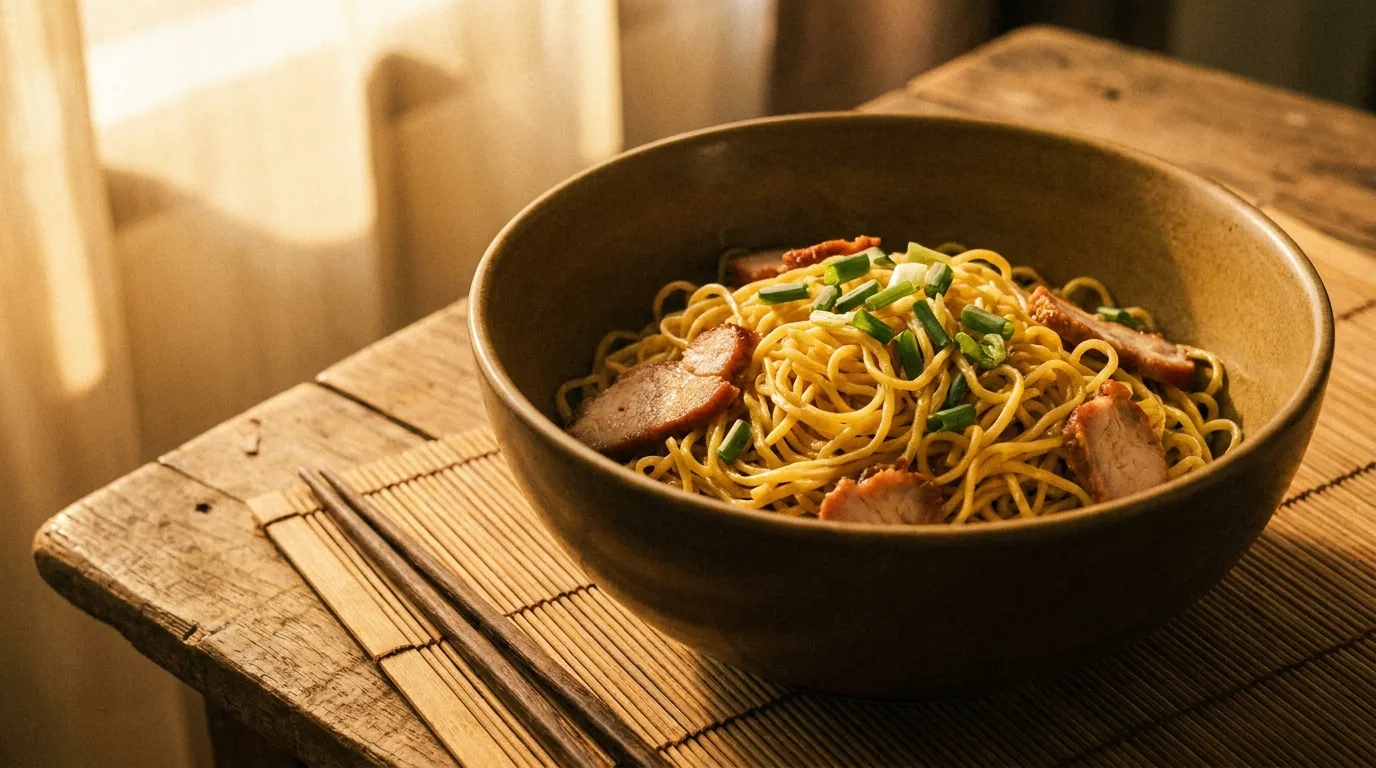
These are Chinese-style egg noodles — thin, springy, yellow from the alkaline salt and egg yolks, sized for lo mein and chow mein. The clean ingredient list is the differentiator versus mainstream Chinese-grocery options. Twin Marquis fresh lo mein from H Mart is the higher-ceiling pick when you can get it; Hakubaku is the dry, shelf-stable, Whole Foods-friendly answer for someone who doesn't live near a Chinese grocery and wants a quality starting point for stir-fry.
The right buy for Hakubaku is Chinese-leaning weeknight cooking — lo mein with oyster sauce and bok choy, chow mein with chicken and ginger, hokkien-style hawker noodles, or a Singapore-style curry stir-fry. Reach for Reames or Penn Dutch when you need a Midwestern comfort noodle; reach for Hakubaku when the recipe calls for a wok.
One note on the brand: Hakubaku has been milling wheat noodles in Tokushima since 1941. The Chinese egg-noodle line is a smaller part of the catalog than the soba and udon — most US Whole Foods locations stock only the udon and soba, so the egg-noodle SKU is mostly an Amazon buy. The 8-pack lands around $32 with Prime shipping, which is roughly $4 per 270g bag — pricier per ounce than Penn Dutch, but the organic certification and the clean ingredient list put it in a different tier.
One product does not cover all four jobs. Reames for stroganoff, Penn Dutch for the budget version, No Yolks for the cardiac diet, Hakubaku for the wok.
What to Look For
- Ingredient list ends at wheat flour + eggs + water + salt. Vitamins (niacin, iron, thiamine, riboflavin, folic acid) are standard US enrichment and fine. Anything past that — gums, stabilizers, multiple egg-product sub-ingredients — is filler.
- Match the format to the dish. Frozen for stroganoff and soup (Reames), dry shelf-stable for budget weeknight cooking (Penn Dutch, No Yolks), thin Chinese-style for stir-fry (Hakubaku).
- Country of origin from a noodle region. Iowa for Reames, Pennsylvania for Penn Dutch, Japan for Hakubaku. Generic "made in USA" with no state or no founding story is usually private-label commodity stock.
- Yolk content is the richness lever. More yolks = richer, eggier flavor and a yellower noodle. No Yolks is the deliberate low-yolk play; Reames is the high-yolk play. Penn Dutch sits in the middle.
- Visible expiration code on the bag, not just a printed year. Dry egg noodles last 2 years sealed but go stale faster than plain pasta because of the egg solids.
Common Mistakes
- Using dry Pennsylvania Dutch in a Chinese stir-fry. The cut is wrong, the dough lacks alkaline bite, and the wide flat ribbons go flabby in a hot wok. Use Hakubaku or Twin Marquis fresh lo mein for stir-fry.
- Buying No Yolks expecting traditional richness. No Yolks is built around the absence of yolks. It's a cardiac-diet product, not a flavor product. For stroganoff and rich-cream dishes, the yolk loss shows.
- Treating frozen Reames like dry noodles. Reames cooks for 20 minutes, not 8, and absorbs more water during cooking. Recipes written for dry egg noodles will read under-broth and over-noodle if you swap one-for-one without adjusting.
- Buying generic "egg noodles" with no brand at a small Asian grocery. Unbranded egg noodles in the dry-pasta aisle of a small Chinese or Korean grocery are usually unbranded private label with no quality control. The Twin Marquis refrigerator case is the H Mart move; for dry, stick to Hakubaku.
- Skipping the cold rinse on Hakubaku. Chinese-style egg noodles have surface starch that turns gummy in a wok if you don't rinse cold after boiling. Reames and Penn Dutch don't need this step — they're going into broth or cream sauce, not a hot stir-fry.
FAQ
Are egg noodles healthy? Traditional egg noodles run about 220 calories and 2g fat per 2-oz dry serving — slightly more fat than regular pasta because of the yolks, but also more protein. The fat is the cholesterol-bearing kind, which is why No Yolks exists. For a low-cholesterol diet, swap in No Yolks. For everyone else, egg noodles are a pasta-class food — fine in normal portions, not a health food.
Is Reames different from regular egg noodles? Yes. Reames is frozen, not dry. The dough goes through a rolling and cutting process closer to homemade than to dried commercial pasta, then it's flash-frozen instead of dehydrated. The result is a thicker, eggier, chewier noodle that holds up in 4-hour stroganoff and still has bite. Dry egg noodles cook in 6-8 minutes; Reames takes 20.
What can I use instead of egg noodles? For stroganoff and Midwestern comfort food, fettuccine or pappardelle is the closest dry-pasta substitute — flat ribbon, similar surface area. For chicken-noodle soup, broken-up fettuccine works. For Chinese lo mein, use fresh Cantonese wheat noodles (Twin Marquis) or Hakubaku organic. Spaghetti tossed with a half-teaspoon of baking soda mimics the alkaline bite of Chinese egg noodles in a pinch.
Are Pennsylvania Dutch egg noodles actually made by Pennsylvania Dutch people? Not anymore. The brand traces back to Pennsylvania German (Pennsylvania Dutch) communities in the 19th century — wide flat egg noodles are a staple of that food tradition. The brand now belongs to New Mill Holdings and the noodles are produced in Pennsylvania, but it's a commercial pasta company, not a community brand.
Can I use Chinese egg noodles for stroganoff? Technically yes — they'll absorb the sauce — but the cuisine mismatch shows. Chinese egg noodles like Hakubaku are thinner and springier from alkaline salt, which gives them a yellow color and a bouncy bite. Stroganoff wants thick, soft, yolk-rich strands that soak up sour cream. Use Reames or Pennsylvania Dutch for stroganoff; reserve Hakubaku for stir-fry and lo mein.
How long do dry egg noodles last in the pantry? Sealed Pennsylvania Dutch or No Yolks bags last 2 years from the printed date in a cool, dry pantry. Once open, transfer to an airtight container and use within 6 months — egg noodles pick up moisture and pantry odors faster than plain pasta because of the yolk solids. Frozen Reames lasts 12 months in a 0°F freezer.
Read Next
- Egg Noodles Explained (full encyclopedia)
- Egg Noodles vs Pasta
- Lo Mein (Chinese egg noodle dish)
- Best Chinese Wheat Noodles
All Picks
- #1
Reames Homestyle Frozen Egg Noodles (12 oz, 4-pack)
Pros- Iowa-made by the Reames family since 1949 — the canonical Midwestern frozen egg noodle for chicken-noodle soup and stroganoff
- Thicker, eggier, and more substantial than any dry egg noodle on the US market — closest mass-market product to homemade
- Stocked nationwide in the freezer case at Walmart, Hy-Vee, and Kroger
Cons- Frozen shipping format limits Amazon availability and raises per-bag cost versus dry
- 20-minute cook time; absorbs more water than dry noodles, so recipes written for dry need adjustment
- #2
Pennsylvania Dutch Wide Egg Noodles (16 oz, Pack of 4)
Pros- The grocery-aisle anchor for dry egg noodles — stocked at every Kroger, Safeway, and Albertsons
- Shelf-stable, cooks in 6-8 minutes, ~$3.75 per 16-oz bag in the multipack
- Wide cut works in stroganoff, buttered noodles, casseroles, and chicken-noodle soup
Cons- Less rich and less eggy than Reames frozen — the texture is good, not great
- Wrong cut for any Chinese stir-fry — the wide flat shape goes mushy in a wok
- #3
No Yolks Cholesterol-Free Egg White Noodles (12 oz, Pack of 4)
Pros- Launched 1986 as the first mainstream egg-white-only noodle — zero cholesterol, lower fat than traditional egg noodles
- Same color and similar texture to traditional egg noodles, with about half the fat per serving
- Doctor-recommended for cardiac diets and low-cholesterol meal plans
Cons- Missing the yolk-driven richness — works in soup, falls flat in beef stroganoff
- Slightly more brittle than a yolk noodle; overcooks faster than Reames or Penn Dutch
- #4
Hakubaku Organic Chinese Egg Noodles (270g, 8-pack)
Pros- Certified organic — wheat flour, eggs, salt, water, nothing else. Cleanest ingredient list in the category
- Made in Tokushima, Japan by Hakubaku, the same maker behind the Whole Foods soba and udon
- 4-minute cook; the Chinese-style egg noodle that works for lo mein, chow mein, hokkien mee, and stir-fries
Cons- Wrong format for stroganoff or chicken-noodle soup — too thin and springy for Midwestern comfort dishes
- Higher unit cost than Penn Dutch; not stocked at mainstream US grocery outside Whole Foods