Best Rice Noodles in 2026 — Every Shape Across Pho, Pad Thai, and More
The best rice noodles on US Amazon — Three Ladies bánh phở, A Taste of Thai, Annie Chun's brown rice, and Lotus Foods organic. Ranked for every shape and use case.
This section contains affiliate links. We may earn a commission at no extra cost to you.
Rice noodles split into four buying decisions, not one. Bánh phở for soup, sen lek for pad thai, sen yai for pad see ew, bún for cold bowls. Three Ladies Brand is the bánh phở the US restaurant trade buys. A Taste of Thai is the grocery-aisle fallback for the weeks when H Mart is 40 minutes away. Brown-rice and organic options round out the wellness and beginner ends of the shelf.
How We Pick
- US distribution reliability was the heaviest single criterion. A noodle that's only stocked at three Asian groceries in San Gabriel doesn't help a reader in Cincinnati. Picks needed Amazon Prime availability plus mainstream grocery presence — H Mart, 99 Ranch, Whole Foods, Target, or Sprouts.
- Strand consistency under cooking matters more than brand prestige. Cheap rice noodles shatter into starch shards when boiling broth hits them. The Three Ladies and Lotus Foods lines hold strands; mid-tier brands often don't.
- Cross-shape availability — does the brand carry the right widths for pho (3-5 mm), pad thai (5 mm), and pad see ew (10 mm)? A brand that only makes one width forces you to mix manufacturers, which adds shopping friction.
- Price-per-pound, calculated across the brand's full SKU range. Three Ladies at $1.49/lb at H Mart is the value floor; the Lotus Foods organic line at $9.60/lb is the premium ceiling. Annie Chun's sits between.
- We did not weight "freshness." Rice noodles are shelf-stable dry product with 18-24 month pantry lives. Pack-date variance across the brands tested was inside the margin of error for cooked texture.
The Top Pick: Three Ladies Bánh Phở
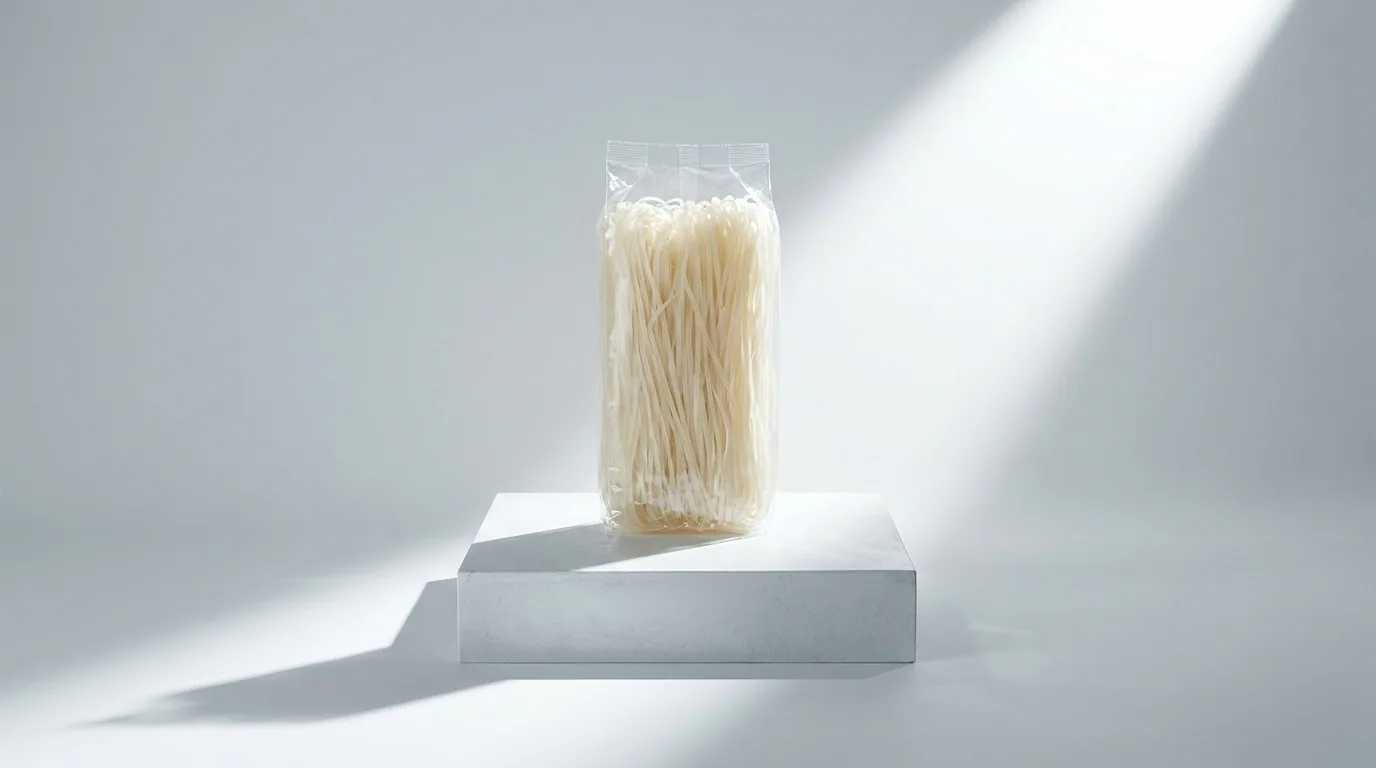
Three Ladies is what most US Vietnamese restaurants buy. The brand is distributed by Asia Trans & Co out of Brooklyn, manufactured in Thailand from jasmine-rice flour, and has been the US default flat rice noodle for roughly three decades. At H Mart in Garden Grove, the 1-lb cellophane bag runs $1.49. At 99 Ranch in San Gabriel, $2.99. On Amazon US, the 3-pack of 14-oz bags runs about $13.16 — that's roughly $4.40 per bag, or a $2.91 premium over the H Mart shelf price.
The reason it wins isn't the brand mystique. It's strand consistency. The 3 mm flat noodle stays separate through the 30-minute cold soak, holds al dente bite through the 60-90 second boil, and survives the hot-broth pour that phở assembly demands. Cheaper brands disintegrate at the broth-pour stage and turn the bowl into starch soup by the second sip. Three Ladies doesn't.
The brand sells the noodle in 3 mm (the pho standard), 5 mm (chicken pho and some southern Vietnamese variations), and 1 mm (closer to bún territory). For pho, buy the 3 mm or the 14-oz "Rice Stick Pad Thai" SKU, which is the same flat rice noodle marketed across both cuisines. The standard prep — cold soak, fast boil, cold rinse, divide into bowls, then pour boiling broth on top — finishes the cook through heat shock and locks the texture.
One note on labeling. The Amazon listing carries both "Rice Stick" and "Pad Thai Noodle" in the title, which trips up first-time buyers expecting a Thai-specific product. It's the same flat 3-5 mm rice noodle the Three Ladies factory ships across both cuisines. The Vietnamese pho trade and the Thai stir-fry trade have been buying the same SKU for decades; the dual labeling is marketing, not a recipe instruction.
Three Ladies wins on strand consistency, not brand mystique. The 3 mm noodle stays separate through the soak, the boil, and the hot-broth pour. Cheaper brands shatter at the pour.
Best Budget: A Taste of Thai
A Taste of Thai is the grocery-aisle fallback. The brand sits on Whole Foods, Trader Joe's, Kroger, Safeway, and most mainstream chains — the kind of distribution that matters when you live more than 30 minutes from the nearest H Mart. The 6-pack of 16-oz bags runs $34.19 on Amazon US, which works out to $5.66 per pound. That undercuts most specialty Asian-grocery sen lek SKUs and is competitive with H Mart's 1-lb bags once you factor in driving time.
The trade-off is texture. A Taste of Thai cuts thinner than authentic Thai sen lek, and the strands soften faster under wok heat. For pad thai where the tamarind sauce carries the flavor load and the noodle is mostly a vehicle, that's fine. For a soup application — pho, hu tieu — the strands break apart when boiling broth hits them, and the bowl loses structure by minute three. Use this noodle for stir-fry; switch to Three Ladies for soup.
The brand also runs a multi-cuisine "Asian rice noodle" SKU that doesn't list width on the package. Skip that one. Buy the bag clearly labeled "rice noodles" with a measurable width or stick to the pad thai SKU, which is the closest A Taste of Thai gets to authentic 5 mm sen lek.
Standard Pick: Annie Chun's Brown Rice Noodles
Annie Chun's is the health-aisle pick. The brand was acquired by CJ Foods (the Korean conglomerate behind Bibigo and CJ Cheiljedang) in 2008, which is why distribution is strong — Target, Whole Foods, Sprouts, mainstream chains all stock it. The 6-pack of 8-oz bags runs about $24.99 on Amazon, or roughly $0.52 per ounce. That's about 2.5x the per-ounce cost of A Taste of Thai.
What you're paying for is the brown-rice substrate. Brown-rice noodles carry 4-5 g of fiber per serving versus 1 g for white-rice noodles, plus marginally more magnesium and B vitamins. They're vegan and certified gluten-free. The flavor is the trade-off — brown rice reads nuttier, less neutral, and doesn't disappear behind sauce the way white rice does. Authentic pad thai uses white-rice sen lek; this brand approximates it for fiber-conscious cooks who'd rather not switch to wheat or buckwheat. Treat it as a brown-rice noodle dish, not a Thai dish in disguise.
The 8-oz pack size also matters. It's enough for two pad thai servings or one stir-fry-for-four — small enough that an opened bag goes through fast, before the brown-rice oil compounds (which oxidize faster than white-rice starch) start to off-flavor.
Best for Beginners: Lotus Foods Organic
Lotus Foods is the premium-tier pick and the one with the most documented supply chain. The brand built its line around the System of Rice Intensification (SRI) — an agronomic method developed in Madagascar in the 1980s that works with smallholder farmers across India, Cambodia, and Thailand. The 6-pack of 8-oz organic brown-rice pad thai noodles runs about $28.99 on Amazon, which works out to $9.60 per pound. That's the most expensive option on this list by a wide margin.
The argument for paying it is the noodle itself plus the sourcing story. The Lotus Foods organic line cuts slightly thicker than Three Ladies — closer to 6 mm than 5 mm — which gives the noodle more thermal mass and makes it more forgiving for first-time cooks who tend to over-soak. The 30-minute cold soak that turns a Three Ladies strand limp leaves a Lotus Foods strand still firm. For the home cook learning the timing, that buffer is real.
The smallholder-farmer sourcing is also documented and verifiable. Lotus Foods publishes the SRI farms it partners with, and the organic certification is USDA, not the looser international variants. If the supply-chain story matters to you, this is the rice noodle that earns the premium.
The flavor trade-off is the same one as Annie Chun's — brown rice reads nuttier, less neutral, and competes with the tamarind in pad thai sauce instead of disappearing behind it. The Lotus Foods white-rice line, sold separately, is closer to the Three Ladies texture profile if you want the brand's sourcing story without the brown-rice flavor.
What to Look For
- Rice as the only or primary ingredient. Water and salt are acceptable additions; tapioca starch as a major component is not. Tapioca-blended rice noodles cook softer and don't hold under hot broth. Pure rice is the spec for both pho and pad thai.
- Country of origin: Thailand, Vietnam, or a US-based Vietnamese manufacturer. Generic "Asian" rice noodles manufactured outside this corridor tend to cook softer and break easier. The corridor matters because the rice varietals and milling practices are tuned to the noodle.
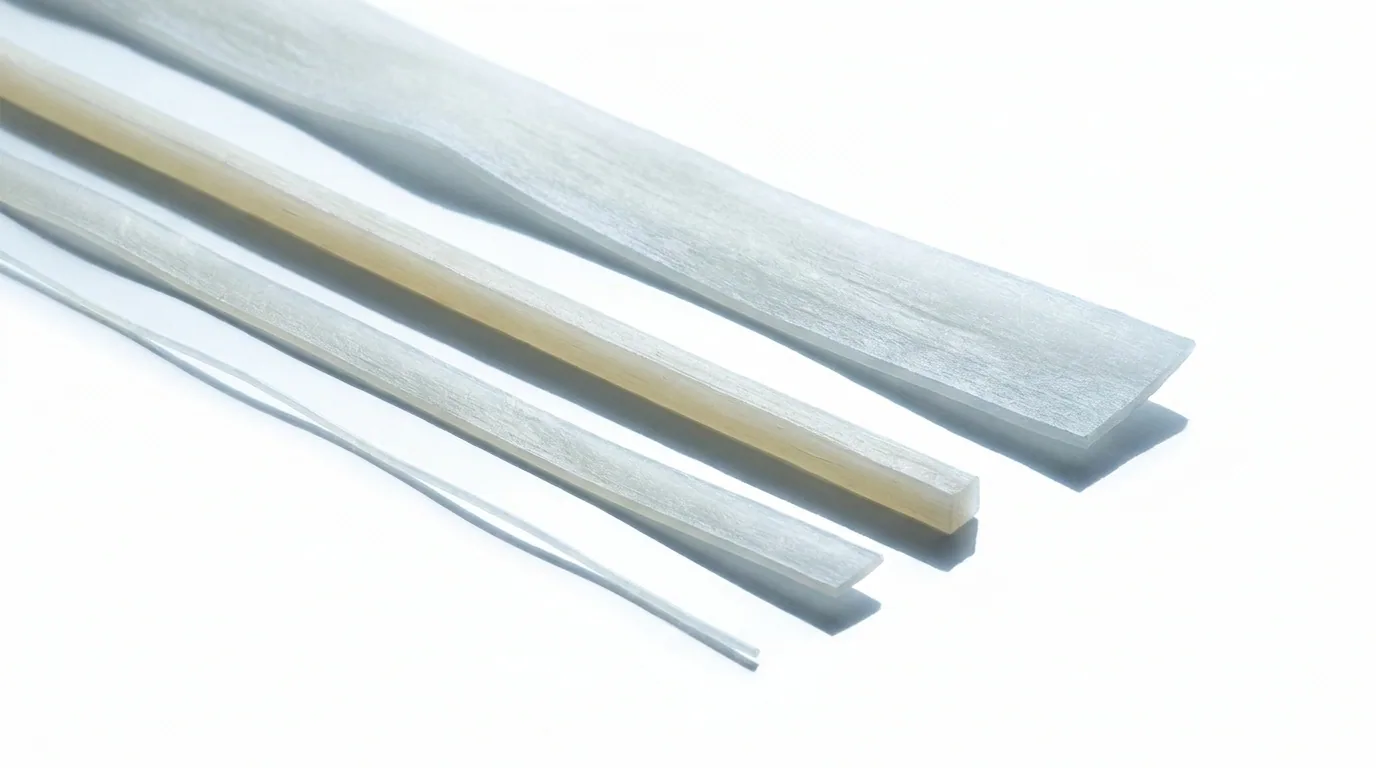
- Width clearly listed in millimeters. 1 mm = vermicelli/bún. 3 mm = pho. 5 mm = pad thai sen lek. 10 mm = sen yai for pad see ew and drunken noodles. A bag that lists "small," "medium," "large" without numbers is a brand that hasn't decided which dish you're cooking.
- Cellophane packaging with a visible date code, not just a vague "best by" year. Fresh stock cooks better; year-old rice noodle goes brittle and shatters when it hits hot water.
- Not pre-cooked or refrigerated. The supermarket "fresh rice noodle" trays in the produce section go gummy fast and have a 4-day fridge life. Dry shelf-stable is the standard for both pho and pad thai at home.
Common Mistakes
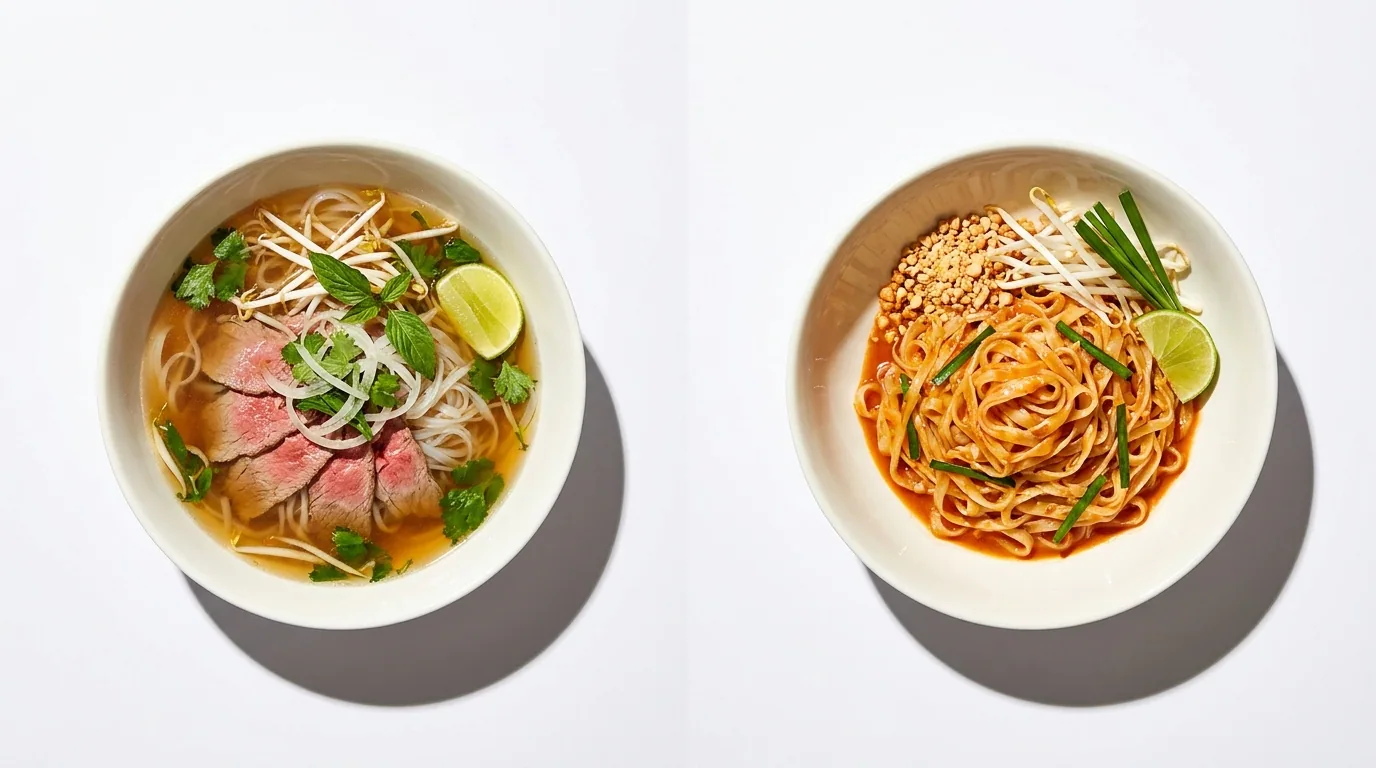
- Buying the wrong width for the dish. Sen lek (5 mm) in pho gives you mushy strands; bánh phở (3 mm) in pad thai gives you a noodle too narrow to hold the tamarind sauce. The width is the dish — get it right at the store, not at the stove.
- Buying the pre-cooked refrigerated rice noodle. Those trays in the supermarket produce section are convenient and wrong. They turn to gum in soup within 90 seconds of broth contact and lose structure in stir-fry by the second minute.
- Choosing brown rice for an authentic Thai dish. Brown-rice pad thai is a brown-rice pad thai. It's a different dish. If the goal is authenticity, buy white-rice sen lek. If the goal is fiber, buy Annie Chun's — but don't expect it to taste like the version from a Bangkok street cart.
- Over-paying for branding when generic Asian-grocery rice noodle is equivalent. Most H Mart or 99 Ranch rice noodles at the $1.49 price point are co-packed in the same Thailand factories that supply the named brands. The premium tier (Lotus Foods, organic certifications) buys you sourcing documentation; the mid-tier (Annie Chun's, A Taste of Thai) often buys you mainstream-grocery convenience and not much else.
- Skipping the cold rinse after boiling. Boiled rice noodle keeps cooking on residual heat. Cold-rinsing under the tap stops the cook at the right moment and removes surface starch that would otherwise turn the noodles gummy on the plate.
Related Reading
- Pho (Vietnamese rice noodle soup) — the type-page deep-dive on bánh phở
- Pad Thai (Thai stir-fry) — sen lek, tamarind, the full breakdown
- Rice Noodles Explained (the full encyclopedia) — every width, every dish, one chart
- How to Cook Rice Noodles — soak times, boil times, what to do when they tear
- Best Pho Noodles & Kits — the pho-specific buying guide with broth concentrates
- Best Pad Thai Noodles & Sauces — sen lek picks plus tamarind-sauce kits
FAQ
What's the best rice noodle brand overall? Three Ladies Brand is the US restaurant standard. It's the bánh phở noodle most Vietnamese-American restaurants buy in bulk, distributed by Asia Trans & Co out of Brooklyn. Sold at H Mart for ~$1.49 a 1-lb bag and on Amazon in a 3-pack of 14-oz bags for ~$13.16. The strands stay separate through cooking and don't shatter under boiling broth.
Are Thai rice noodles and Vietnamese rice noodles the same? No, and the difference is width. Vietnamese bánh phở is flat and 3-5 mm wide, designed for soup. Thai sen lek is flat and ~5 mm, designed for stir-fry; sen yai is 10 mm and used in pad see ew and drunken noodles. Both are pure rice-flour noodles, but width determines which dish they belong in.
Is rice vermicelli the same as rice stick? No. Rice vermicelli (Vietnamese bún, Thai sen mee) is round and thin, ~1 mm in diameter. Rice stick is flat and ranges from 3 mm (bánh phở) to 10 mm (sen yai). Vermicelli goes into cold bowls and rolls; rice stick goes into soup and stir-fry. Three Ladies sells both — check the package width before buying.
Where can I buy Three Ladies rice noodles? H Mart and 99 Ranch carry the 1-lb bag for $1.49-$2.99 depending on store. Most regional Vietnamese groceries stock it. Amazon US sells the 3-pack of 14-oz bags for around $13.16 with Prime shipping.
Are brown rice noodles healthier than white rice noodles? Marginally. Brown-rice noodles carry 4-5 g of fiber per serving versus 1 g for white-rice noodles, plus slightly more magnesium and B vitamins. The flavor difference is significant — brown rice is nuttier and less neutral, so it reads less like authentic pad thai or pho. Buy them for the fiber, not for tradition.
How long do dry rice noodles last? Sealed in their original cellophane in a cool dry pantry, 18-24 months from the pack date. Once opened, transfer to an airtight bag and use within 6 months — the noodle goes brittle as humidity escapes, and brittle rice noodle shatters into shards when it hits hot water.
All Picks
- #1
Three Ladies Brand Rice Stick Pad Thai Noodle (14 oz, 3-pack)
Pros- Brooklyn-based importer (Asia Trans & Co) — the brand most US Vietnamese restaurants buy in 25-lb cases
- Strands stay separate and hold shape under the hot broth pour that bánh phở demands
- Stocked at H Mart, 99 Ranch, and Amazon US — no specialty hunt required
Cons- Per-pound price runs higher on Amazon (~$4.40 per 14-oz bag) than the $1.49 H Mart shelf price in Garden Grove
- 3-packs sell out periodically; bulk buyers may need to switch to the 4-pack SKU
- #2
A Taste of Thai Rice Noodles, 16 oz (Pack of 6)
Pros- Mainstream grocery distribution — Whole Foods, Trader Joe's, Kroger, Safeway all carry it
- $5.66 per pound across the 6-pack works out cheaper than most Asian-grocery sen lek imports
- Decent first-timer noodle — the brand is forgiving when you over-soak by a minute
Cons- Thinner cut than authentic sen lek; texture goes soft fast under pad thai stir-fry heat
- Weak for pho — the strands break apart when boiling broth hits cold-rinsed noodles
- #3
Annie Chun's Pad Thai Brown Rice Noodles, 8 oz (Pack of 6)
Pros- Brown-rice flour brings 4-5g of fiber per serving versus 1g in white-rice noodles
- Stocked at Target, Whole Foods, Sprouts — easy weekday pickup outside Asian-grocery hours
- Vegan and gluten-free certified; the brand is owned by CJ Foods so QC is consistent
Cons- Brown-rice flavor (nuttier, less neutral) doesn't read as authentic pad thai
- Per-ounce cost runs ~$0.52 versus ~$0.21 for A Taste of Thai — you're paying the wellness premium
- #4
Lotus Foods Organic Brown Rice Pad Thai Noodles (8 oz, 6-pack)
Pros- USDA Organic certified and built on Lotus Foods' SRI (System of Rice Intensification) smallholder-farmer program
- Slightly thicker noodle than Three Ladies — more forgiving for first-time cooks who over-soak
- Sold at Whole Foods, Sprouts, and most natural-grocer chains alongside Amazon
Cons- ~$4.80 per 8-oz bag puts this in the premium tier — about 2.3x the per-ounce cost of Three Ladies
- Organic certification adds cost but doesn't change the cooked flavor in a measurable way