
Nongshim is the Korean food company most American shoppers have eaten without realizing — the parent of Shin Ramyun (the red packet in nearly every US grocery), Chapagetti (the Korean black-bean noodle from Parasite), and Neoguri (the spicy seafood udon with the cube-shape noodle). Founded in 1965 by a brother who walked away from Lotte, Nongshim became Korea's #1 instant noodle company after Samyang's 1989 collapse and now manufactures from two California plants. Here's the company behind the products.
What is Nongshim?
Nongshim Co., Ltd. (농심, nong-sheem) is a South Korean food conglomerate founded in September 1965 by Shin Choon-ho (1932–2021). The company is listed on the KOSPI (ticker 004370), headquartered in Seoul, and is the parent of Korea's largest instant-noodle lineup — Shin Ramyun, Chapagetti, Neoguri, Anseongtangmyeon, plus a wider snack and beverage portfolio.
Nongshim's three anchor instant noodles all rank among the top ten best-selling in Korea by volume. Combined with Shin Ramyun's distribution dominance, Nongshim controls roughly 55 percent of the Korean domestic instant-noodle market — a position the company has held continuously since 1991.
For the product-level story of Shin Ramyun, see the dedicated brand page. This page covers Nongshim as a company: founding, the Lotte family split, the broader product family, the US manufacturing strategy, and the 1989-1991 inflection that made Nongshim #1.
The 1965 founding — and the Lotte split
Nongshim's origin story starts with the Shin brothers. Shin Kyuk-ho (1922–2020), the younger brother, founded Lotte Group in Japan in 1948 and brought it to Korea in 1967. Through the 1960s, Shin Choon-ho — the elder brother — ran Lotte's food division. The two brothers disagreed about strategic direction, particularly around how aggressive Lotte's food business should be relative to its confectionery and retail core.
In 1965, Shin Choon-ho left and founded Lotte Industrial Co. as a separate food-manufacturing company. The new company's first products were Korean-style snacks (Shrimp Crackers, the iconic puffed-corn Banana Kick), launched in 1971. In 1978, the company rebranded from Lotte Industrial to Nongshim — nong (農, agriculture) + shim (心, heart) — to signal a clean break from Lotte's brand identity and a connection to Korean rural farming heritage.
The brothers never publicly reconciled. The Shin family feud is one of the most-studied corporate splits in Korean business history. The two brothers attended separate family events; Lotte Group and Nongshim competed in adjacent markets (snacks, confectionery, beverages) for decades without coordination. Shin Choon-ho died in 2021, a year after Shin Kyuk-ho's death in 2020.
A note on confusion: the Shin-brothers split is sometimes mixed up with the Samyang-Nongshim rivalry. They're different stories. Samyang's founder Jeon Joong-yoon was unrelated to either Shin brother. The two ramen-company founders were competitors, not relatives.
The product family beyond Shin Ramyun
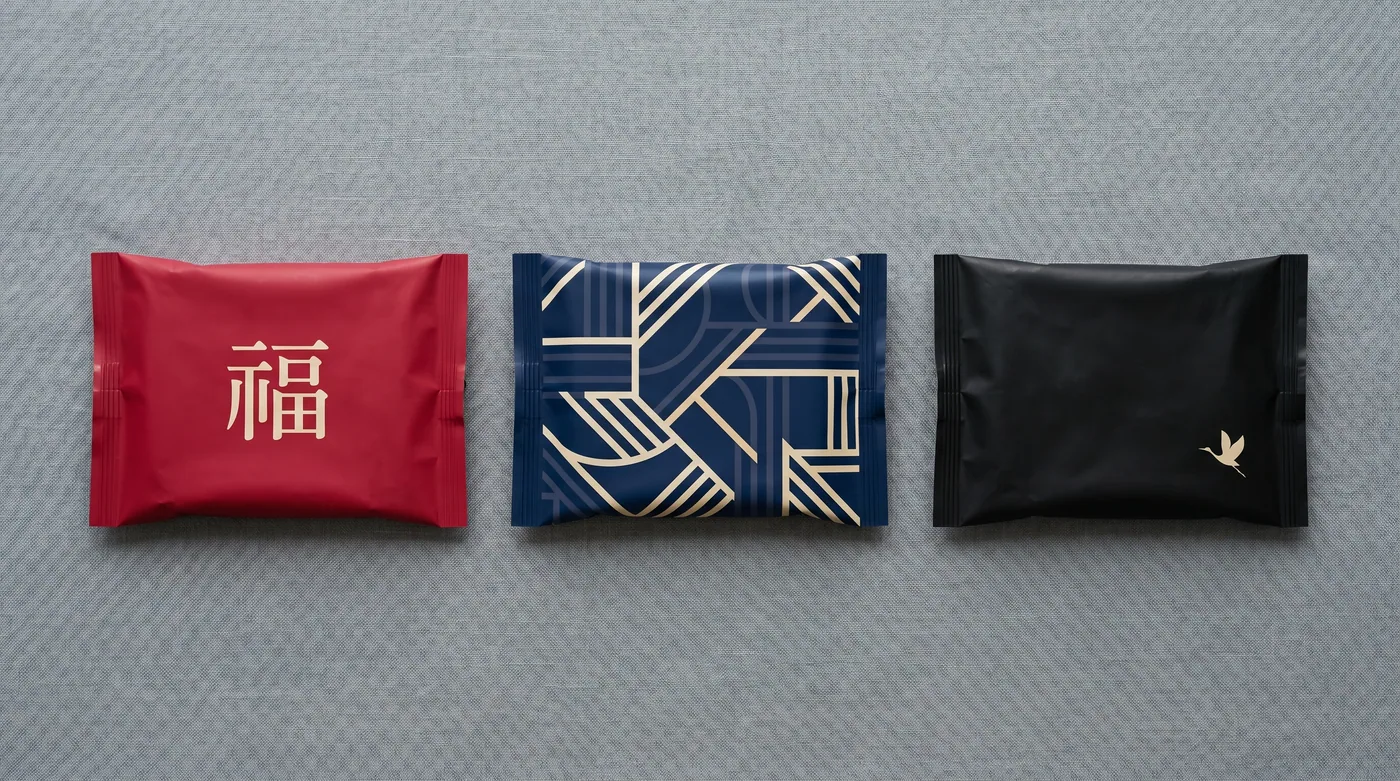
Nongshim's lineup runs deeper than most US shoppers realize. The major instant-noodle products:
| Product | Launched | What it is |
|---|---|---|
| Anseongtangmyeon (안성탕면) | 1983 | Beef-broth instant noodle, milder than Shin Ramyun, more savory than spicy |
| Chapagetti (짜파게티) | 1984 | Korean black-bean (jajang) instant — chunjang sauce + chewy noodles, brown not red |
| Shin Ramyun | 1986 | The spicy beef-mushroom flagship. See /brands/shin-ramyun |
| Neoguri (너구리) | 1982 | Spicy seafood broth, thicker udon-cut noodle, dried kelp piece in every packet |
| Yukgaejang Bowl | 1981 | Bowl-format spicy beef soup |
| Olive Chapagetti | 2010s | Premium Chapagetti with olive-oil-fortified seasoning |
| Chapagetti Big Bowl | 1990s | Chapagetti in cup format |
| Shin Black (2011), Shin Light (2010s), Shin Kimchi (2013) | various | Shin Ramyun variants — see Shin Ramyun brand page |
The snack portfolio is broader: Shrimp Crackers (1971, Nongshim's debut product), Banana Kick (1978), Onion Rings (1983), Honey Twist (1986), Chal Tteok Pie (filled cookies). Most are stocked at H Mart and 99 Ranch in the US; few have crossed into mainstream American supermarket distribution the way Shin Ramyun has.
Chapagetti and the Parasite moment
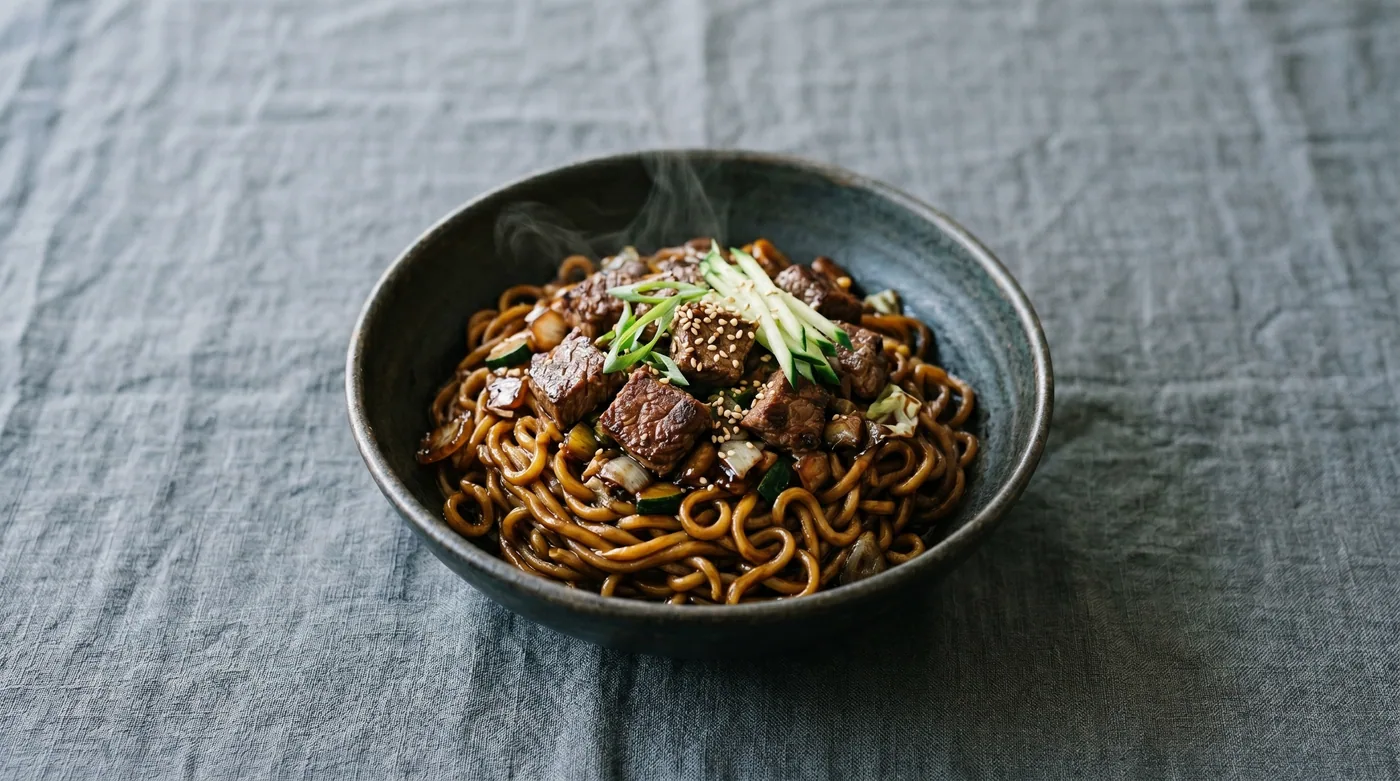
Of Nongshim's three big instant-noodle anchors, Chapagetti had the most global breakout — and the catalyst was a film, not a marketing campaign.
Chapagetti launched in March 1984 as Nongshim's instant adaptation of jjajangmyeon (Korean-Chinese black-bean noodle). The product line works on a different prep flow from soup-style instants: cook the noodles, drain almost all water, mix in the dehydrated chunjang sauce packet plus the included oil, top with whatever vegetables and protein you have. The result is a thick, savory, slightly sweet black-bean noodle that has been a Korean home-cooking staple for 40 years.
In 2019, Bong Joon-ho's Parasite included a memorable scene in which a wealthy Korean family eats a dish the household helper prepares in 4 minutes: chapaguri — one packet of Chapagetti combined with one packet of Neoguri, topped with cubes of expensive Hanwoo beef sirloin. The film's English subtitles called the dish ram-don, a portmanteau Bong Joon-ho's translator coined to avoid losing the Korean cultural reference. After Parasite's 2020 Oscar wins (including Best Picture, the first non-English film to do so), Nongshim's US sales of Chapagetti and Neoguri tripled within six months. The recipe predated the movie by decades — but the visibility was generational.
Today, chapaguri remains a recurring Korean food-blog and YouTube cooking-channel topic. Most viewers' first encounter with Korean instant noodles is now Chapagetti, not Shin Ramyun.
The decade Nongshim took over: 1989–1991
The pivotal years for Nongshim's market dominance came not from its own product launches, but from a competitor's collapse. In November 1989, Korean prosecutors publicly accused Samyang Foods of using industrial-grade beef tallow in its noodle frying. Samyang's sales crashed 75 percent within three months. (The case was overturned by the Supreme Court in 1995, but the damage was permanent. Full story on the Samyang page.)
Korean shoppers needed a substitute. Shin Ramyun, three years into its run and already a strong #2, had three advantages: nearly identical beef-broth flavor profile to Samyang Ramen, sharper spice tier (good for a culture trending hotter), and crucially, no scandal cloud. Through 1990 and 1991, Shin Ramyun absorbed Samyang's market share at a pace Nongshim's own marketing couldn't have engineered. By the end of 1991, Nongshim was Korea's #1 instant noodle company. It still is.
Inside Nongshim's product mix, the rebalance was permanent. Shin Ramyun moved from second-tier flagship to the company's defining product — a position that became central to the brand's identity for the next 30+ years.
The US manufacturing strategy — Rancho Cucamonga and Burbank
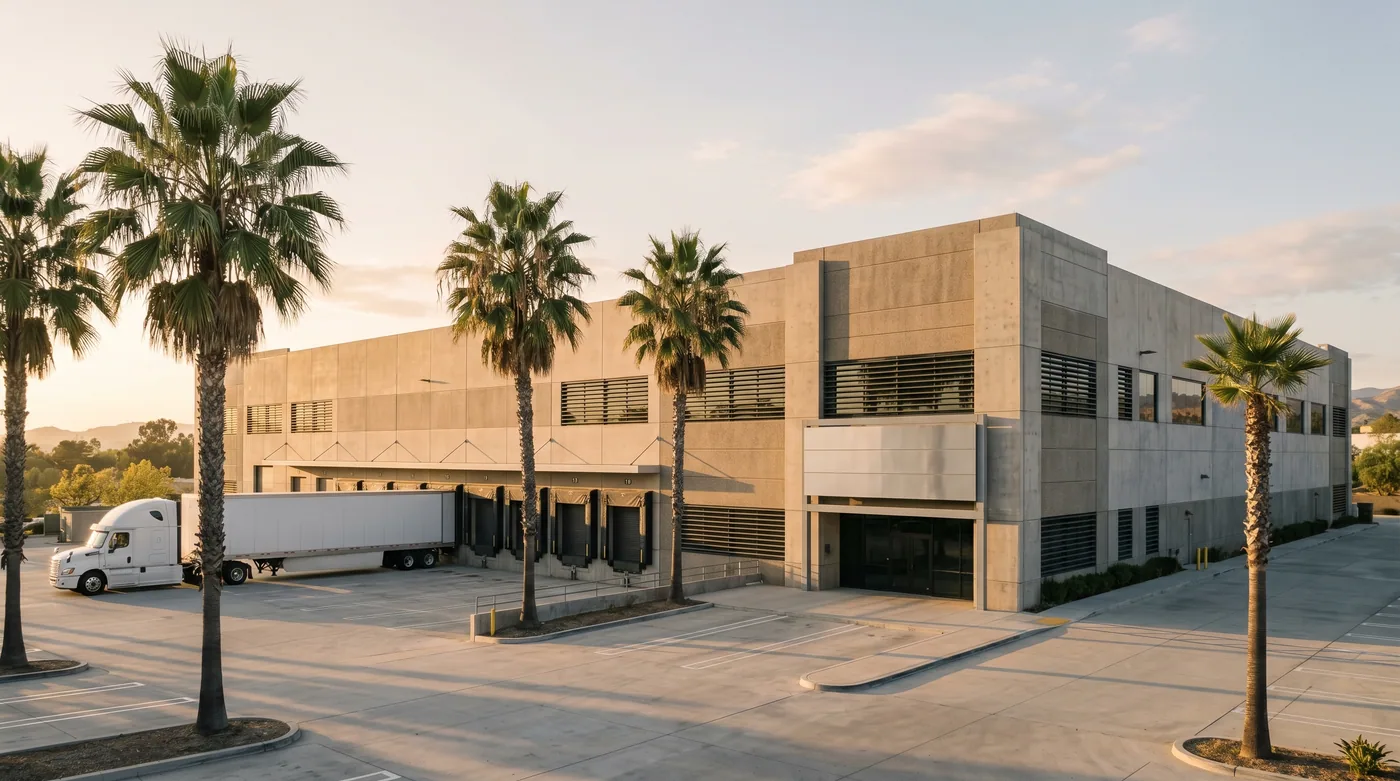
Most Korean food brands export to the US from Korean plants. Nongshim took a different path. In 2005, the company opened a manufacturing facility in Rancho Cucamonga, California — at the time the largest Korean food production plant ever built outside Korea. The strategic logic was direct: domestic US production qualified Nongshim for standard American grocery distribution networks (Walmart, Kroger, Safeway) that imports could not easily reach. Within five years, Shin Ramyun was on shelves in nearly every major US chain.
In 2021, Nongshim opened a second California facility in Burbank to expand capacity. The two California plants combined manufacture roughly 70 percent of all Shin Ramyun, Chapagetti, and Neoguri sold in North America. East Coast distribution sometimes still relies on imported Korean stock for newer or limited-edition variants, but the core lineup is Made in USA.
The decision is the single biggest reason Nongshim has succeeded internationally in a way Samyang and Ottogi have not been able to match: Nongshim built American supply chains a decade before Korean food became globally cool. By the time the K-food wave arrived in 2017-2020, Nongshim was already in every Costco.
Nongshim's competitive position in Korea today
Thirty-plus years after the 1991 takeover, Nongshim still leads the Korean domestic instant-noodle market — but the field around it has reshaped. Approximate current market share runs Nongshim ~55 percent, Ottogi ~25 percent, Samyang ~15 percent, Paldo ~5 percent, with smaller regional brands splitting the remainder. The exact numbers shift quarter to quarter, but the rank order has been stable through the 2020s.
Ottogi (오뚜기, founded 1969 by Ham Tae-ho) emerged as the steady #2 by refusing to fight Nongshim on Nongshim's terms. Rather than chase the premium-spicy positioning Shin Ramyun owned, Ottogi went mainstream-mild. Jin Ramen — Ottogi's flagship, launched in 1988 — runs a softer beef broth in two heat tiers (Mild and Spicy) and prices below Shin Ramyun. The strategy converted households that found Shin Ramyun too aggressive and gave Ottogi a defensible quarter of the market without ever directly threatening Nongshim's anchor.
Samyang's 2012 Buldak launch was the first genuine challenge to Nongshim's lead in 30 years — not because Buldak outsold Shin Ramyun domestically (it never has), but because it captured the cultural attention Nongshim had grown used to owning. Buldak's fire-noodle viral moment (2014 onward, accelerated by YouTube spicy-challenge videos) pulled younger Korean and international consumers toward Samyang for the first time since the 1989 collapse. Nongshim's response was incremental: Shin Black (2011) had already extended Shin Ramyun upmarket with a beef-bone broth premium, and through the 2010s Nongshim leaned harder on limited-edition variants — Shin Tomato, Shin Cup Big Bowl, regional collaboration packs — to keep shelf attention fresh.
The most consequential shift has been outside Korea. In the global instant-noodle export market — particularly the US — Samyang Buldak overtook Shin Ramyun in some 2023 retail-tracking reports, ending decades of Nongshim's international category lead. Domestically, though, Korean shoppers still default to Shin Ramyun. Nongshim's home market remains, for now, Nongshim's.
Where to buy Nongshim in the US
Broadest distribution of any Korean food brand.
- Walmart, Target, Kroger, Safeway, Albertsons, Stop & Shop, Publix — Shin Ramyun Original at most locations, Chapagetti at many, Neoguri at some. International foods aisle.
- Costco — Shin Ramyun 18-pack as a permanent SKU; Chapagetti and Neoguri variety packs seasonally.
- H Mart — full Nongshim lineup including domestic-Korea exclusive variants.
- 99 Ranch Market — Shin Ramyun, Chapagetti, Neoguri reliably. Snack lineup mostly stocked.
- Whole Foods — Shin Ramyun Original at most locations; Chapagetti at select.
- Amazon US — every Nongshim variant, often in multi-pack format.
- Nongshim USA direct (nongshimusa.com) — online ordering with regional shipping.
For halal-certified products, Nongshim exports a halal line to Indonesia, Malaysia, and the Gulf — US stocks may differ in certification status. Check the side panel.
FAQ
What does Nongshim mean? Heart of farming in Sino-Korean — nong (農, agriculture) + shim (心, heart). The name was chosen in 1978 when the company rebranded from Lotte Industrial Co.
Was Nongshim's founder really Lotte's founder's brother? Yes. Shin Choon-ho (Nongshim) was the elder brother of Shin Kyuk-ho (Lotte). The brothers fell out over business direction in 1965; Shin Choon-ho left to start what became Nongshim. They remained estranged for life.
What is chapaguri? The viral dish from Parasite (2019). Combine one packet Chapagetti + one packet Neoguri, top with cubed beef. Predates the movie by decades; sales tripled after the film's Oscar wins.
How is Nongshim different from Shin Ramyun? Nongshim is the company; Shin Ramyun is its flagship product. Same relationship as Samyang Foods to Buldak.
Where are Nongshim noodles made for the US? Rancho Cucamonga, CA (2005) and Burbank, CA (2021). The two California plants are the largest Korean food manufacturing operation outside Korea.
Why did Nongshim overtake Samyang in 1991? Samyang's 1989 wax-oil scandal collapsed their market share; Shin Ramyun absorbed it. Position has held since.