
Shin Ramyun is the Korean instant ramen most non-Koreans can name. Released by Nongshim in October 1986, the red-and-white packet with the bold 辛 character has become one of the most-eaten convenience foods on Earth — sold in over 100 countries, served in US military commissaries, manufactured in California, and a permanent fixture in every Korean grocery aisle from Seoul to São Paulo. Here's how a single product became the global definition of Korean noodle soup.
What is Shin Ramyun?
Shin Ramyun (신라면, sheen rah-myun) is an instant ramen produced by Nongshim Co., Ltd., the Korean food conglomerate founded in 1965. The product launched in October 1986 as Nongshim's premium-spicy-instant entry, designed to compete head-on with Samyang's then-dominant lineup. Within five years it had become Korea's best-selling instant noodle — a position it has held continuously since 1991.
The product is a single dried noodle brick (~120g per packet) plus three seasoning components: a powdered red-pepper-and-beef broth base, a vegetable flake packet (dried shiitake, scallion, carrot), and on some variants a separate liquid garnish. Standard prep is 4 minutes 30 seconds in 550 ml of boiling water. The broth is beef-and-mushroom forward with a sustained gochugaru heat — around 2,700 SHU, mild by Buldak standards but genuinely spicy by mainstream Western ones.
The visual identity is the design choice that mattered most: a deep crimson packet, blocky sans-serif typography, and a single oversized 辛 (Hanja for spicy) in white at the center. Forty years later, the visual code is unchanged.
The 1986 launch and the spicy positioning play
Nongshim founder Shin Choon-ho spent the early 1980s watching the Korean instant-noodle category get hotter — both literally (consumer preference for more red-pepper-forward broths was rising) and competitively (Samyang's grip was firm but vulnerable). His R&D team's brief was to create an instant noodle that landed clearly on the spicy end of the spectrum, with a single-word identity that communicated the positioning at a glance.
The product they shipped in October 1986 was named 신라면 — Shin Ramyun in romanization. The naming play was elegant: 신 is Shin Choon-ho's surname (the most common transliteration of the Korean family name 신), but written as the Hanja character 辛, the same syllable also means spicy or pungent. The packet displays the Hanja character prominently, allowing the brand name to read simultaneously as Shin's Ramyeon and Spicy Ramyeon. Korean shoppers picked up on the double meaning immediately.
Sales started slowly but grew steadily. By 1989 Shin Ramyun had become Nongshim's best-selling product. By 1991 it had overtaken Samyang Ramen as Korea's top-selling instant noodle — a position it has held without interruption since.
The 1989 inflection point — when Shin Ramyun became Korea's #1
The takeover from Samyang wasn't purely product-driven. In November 1989, Korean prosecutors publicly accused Samyang of using industrial-grade beef tallow in its noodle frying process (the case was later overturned by the Supreme Court in 1995, but the damage was permanent — see the Samyang page for the full story). Within three months of the allegation, Samyang's sales had crashed 75 percent.
Korean shoppers needed an alternative. Shin Ramyun, already a strong #2, was positioned perfectly: the same beef-broth profile as Samyang but with a sharper spice tier, the same ~$0.50-per-packet price point, and (crucially) no scandal cloud. Through 1990 and 1991, Shin Ramyun absorbed the market share Samyang lost. The brand has never relinquished the lead position, even after Samyang's vindication. For Korean consumers in their 40s and older, ramyeon and Shin Ramyun are nearly synonyms.
The Hanja character that built the brand identity
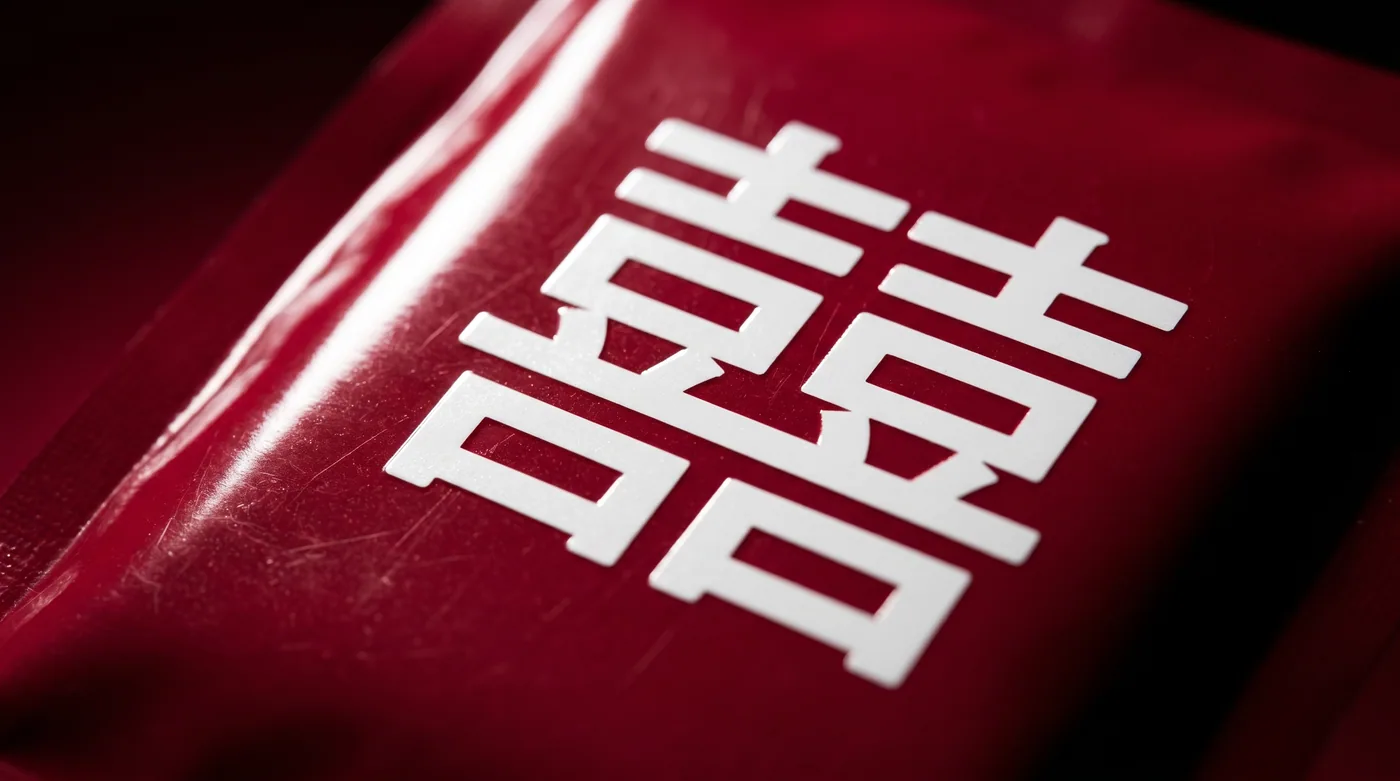
Most Korean instant noodles use Hangul-only branding. Shin Ramyun is one of the few national products that prominently displays a Hanja (Chinese-character) glyph on its packet, and the choice was strategic: 辛 is visually distinctive, communicates the product attribute without translation, and works as a logo at any scale.
The packet design is essentially unchanged from 1986: deep crimson background, white Hangul brand mark in the upper third, the oversized white 辛 character centered, and a photographic still of the prepared bowl across the bottom. When Nongshim opened its US manufacturing in 2005, the company explicitly refused to redesign the packaging for American shelves — they shipped the Korean design unchanged into Walmart and Costco. The packet became one of the few non-English-language products to achieve mainstream US grocery distribution without translation.
The result: Shin Ramyun is the rare Korean food product that is more visually recognizable abroad than its English-language equivalent would be.
The variant lineup
| Variant | Launched | What it is |
|---|---|---|
| Shin Ramyun Original | 1986 | The flagship — beef-mushroom-gochugaru broth, ~120g packet |
| Shin Big Bowl | early 1990s | Original in a 4.02-oz styrofoam cup format |
| Shin Cup | early 1990s | Smaller standard cup, ~75g serving |
| Shin Ramyun Light | 2010s | Reduced-sodium reformulation, ~30% less salt |
| Shin Black | 2011 | Premium variant — adds beef-bone broth concentrate, more vegetables |
| Shin Black Cup | 2012 | Black in cup format |
| Shin Kimchi Ramyun | 2013 | Kimchi-broth-forward variant |
| Shin Tomato | 2024 (limited) | Limited-release tomato-broth reformulation, polarizing reception |
For a first Shin Ramyun purchase in the US, Shin Ramyun Original is the canonical buy. For someone already familiar with the Original who wants a premium version, Shin Black is the obvious next step. The cup formats are for office and dorm contexts where the packet format isn't practical.
Why Shin Black exists — the premium pivot
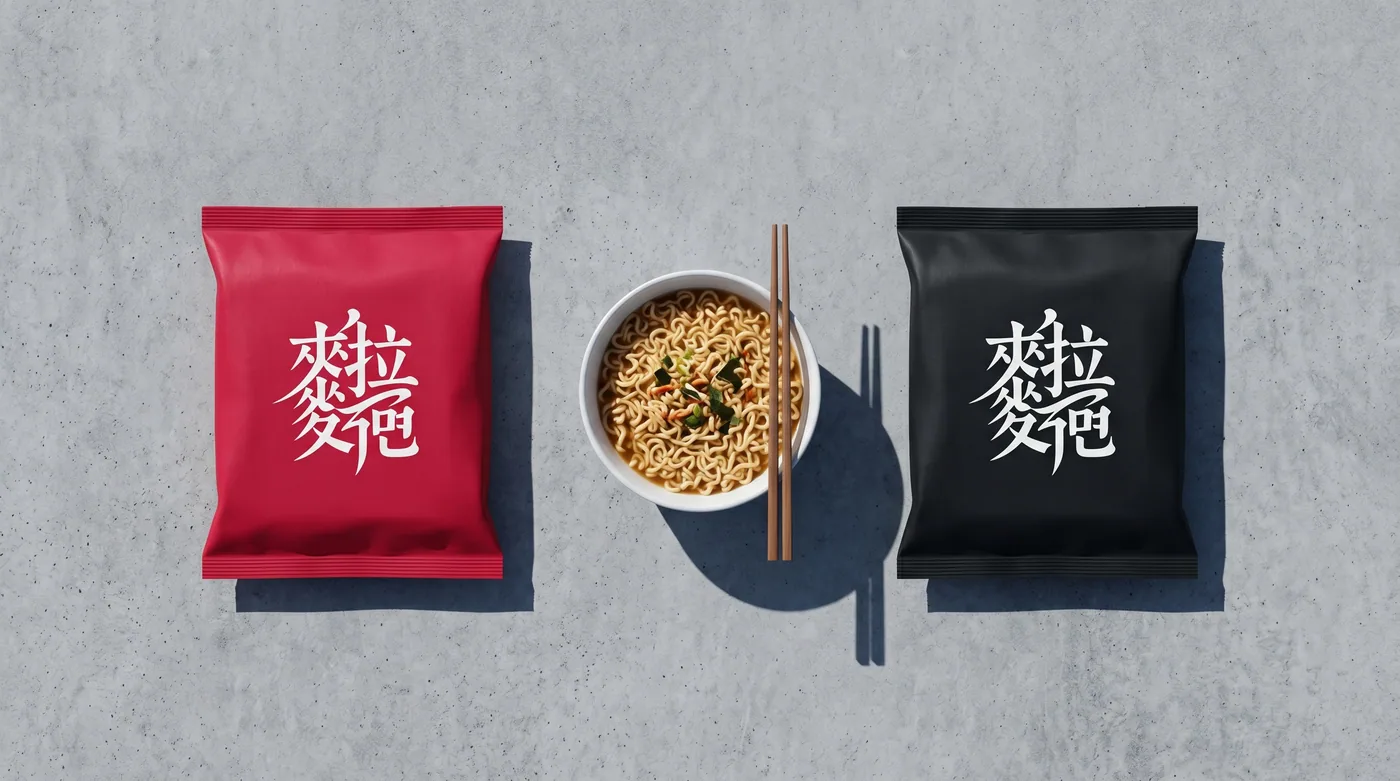
In 2011, Nongshim launched Shin Black at roughly 1.5x the price of the Original. The product was a response to a broader trend: instant ramen in Asia was being premiumized in the late 2000s. Maruchan launched Seimen in Japan (2010). Ippudo released its first US retail kit (2013). Samyang was about to launch Buldak (2012). Shin Black was Nongshim's answer.
The Black variant adds an additional liquid sachet — a concentrated beef-bone broth — that the Original doesn't include. The vegetable mix expands from 4 to 7 components. The sodium per packet drops slightly. The broth color darkens noticeably from the Original's bright red to a deeper russet-brown. The spice level is similar; the depth changes.
For Korean diners, Shin Black became the adult Shin Ramyun — the version you make when you want the Shin profile without the cheap-instant connotation. For US diners discovering Korean food through K-drama and TikTok, Shin Black is the upgrade Nongshim consistently markets as "the closest instant ramen gets to restaurant-quality."
Shin Ramyun's global reach — the US PX and beyond
Shin Ramyun is the only Korean instant noodle distributed broadly through US military commissaries — it has been on the official PX (Post Exchange) and DeCA (Defense Commissary Agency) procurement lists since the early 2000s. US service members station rotations through Korea brought taste familiarity back to bases worldwide, and Shin Ramyun rode that distribution channel into civilian US grocery retail.
The current global footprint:
- Sold in 100+ countries as of 2024
- Manufactured in 4 countries: South Korea (Anyang, Busan), United States (Rancho Cucamonga, CA — opened 2005), China (Shenyang), and Vietnam (Vung Tau)
- Walmart, Costco, Target, Kroger, Safeway, Albertsons — Shin Ramyun Original is in the international foods aisle of nearly every major US chain. No other Korean instant noodle has achieved this depth of mainstream distribution.
- Featured at the 2018 PyeongChang Winter Olympics as one of the official foods served to athletes in the Olympic Village dining hall.
The result: Shin Ramyun has become the cultural ambassador role that Korean food in the 2010s-2020s needed — the product that introduced Korean noodles to American shoppers who would never set foot in an Asian grocery.
How Koreans actually cook Shin Ramyun
The packet prints a clean 550 ml / 4 minutes 30 seconds method, but that is not how the noodle is typically prepared in Korean homes. The standard domestic adjustments are small, consistent, and well established enough to qualify as their own grammar.
The most common addition is an egg cracked into the pot in the final 30 seconds — sometimes left whole, sometimes stirred into ribbons. A close second is a slice of American processed cheese laid on top after heat is off; the convention has its own name, cheese ramyeon (치즈라면), and Korean convenience stores sell pre-portioned cheese slices in the instant-noodle aisle. Sliced spring onion goes in near the end. Some households stir in a spoonful of leftover cold rice for the last third of the bowl — a practice called ramyeon-bap (라면밥), where the rice soaks up residual broth and turns one dish into two courses.
The cookware matters too. Korean kitchens traditionally cook ramyeon in a yang-nyeom-naembi (양은냄비), a thin yellow aluminum pot that heats fast and is itself the eating vessel. The lid doubles as a side plate for kimchi. Eating directly from the pot is the default, not a shortcut.
Shin Ramyun in Korea is the late-night noodle: between drinks, after a movie, alone at 1am with a laptop. Rarely a full sit-down dinner. The K-drama scenes international viewers remember — Crash Landing on You, Itaewon Class, Reply 1988 — almost always show characters eating from the pot on a low floor table. Accurate ethnography, not camera styling.
Where to buy Shin Ramyun in the US
Broader than any other Korean instant noodle.
- Walmart, Target, Kroger, Safeway, Albertsons, Stop & Shop — Shin Ramyun Original at most locations, in the international foods aisle. Standard pricing ~$1.49 per single packet, ~$5.99 for a 5-pack.
- Costco — Shin Ramyun Original 18-pack in most warehouses, often as a permanent SKU rather than a seasonal feature.
- H Mart — full Shin variant lineup including Big Bowl, Cup, Black, Kimchi, and Light.
- 99 Ranch Market — Original, Black, Big Bowl reliably. Other variants vary by location.
- Whole Foods — Original at most locations.
- Amazon US — every variant. The Rancho Cucamonga-manufactured product ships next-day in many US zip codes; imported Korean stock ships slower.
- Trader Joe's — does not carry Shin Ramyun (their private-label and limited-import strategy means the Trader Joe's Korean instant is a different SKU).
For halal-certified Shin Ramyun, the Indonesia/Malaysia export line is KMF-certified; US-stocked product is not. Check the side panel.
FAQ
What does "Shin" mean in Shin Ramyun? Two meanings on the same syllable: founder Shin Choon-ho's surname and the Hanja character 辛 meaning spicy. The double meaning is deliberate; the iconic red character on the packet is the product's primary visual identity.
How spicy is Shin Ramyun? Around 2,700 SHU for the Original — mild jalapeño territory. Genuinely spicy by mainstream American standards, distinctly mild by Buldak standards. The heat builds slowly across a bowl rather than hitting front-loaded.
Is Shin Ramyun the same as ramen? Different category. Ramen is the Japanese tradition (tonkotsu, shoyu, miso, shio); ramyeon is the Korean adaptation, heavier on red-pepper paste, almost always pre-fried and shelf-stable. Calling Shin Ramyun ramen is technically incorrect, though the words have become interchangeable in casual US usage.
Where is Shin Ramyun made for the US market? Rancho Cucamonga, California — Nongshim's North American manufacturing plant since 2005. The largest Korean food production facility outside Korea.
What's the difference between Shin Original and Shin Black? Original is the 1986 product. Black is the 2011 premium variant — adds beef-bone broth concentrate, more vegetables, slightly less sodium. Same noodle, richer broth, ~1.5x the price. For readers tracking sodium for medical reasons, the low-sodium noodle guide covers seasoning-free alternatives that sit well under the 1,500 mg hypertensive ceiling.
Why is Shin Ramyun in K-dramas so often? Product placement and genuine cultural ubiquity. It's the default Korean late-night-snack noodle and writers use it as visual shorthand for familiar, comforting, slightly sad after-midnight food.