Top 10 Spiciest Noodles in the World: 2026 Scoville Ranking
Top 10 spiciest instant noodles ranked by published Scoville — Paldo Volcano at 25,000 SHU down to Shin Ramyun at 2,700. Honest commercial ranking.

The actual ranking is shorter than internet headlines suggest. There are no commercially-available noodles in habanero or ghost-pepper territory — those exist only as restaurant challenge dishes or one-off social-media stunts. Mass-market spicy instant noodles top out around 25,000 Scoville Heat Units (mid-cayenne range). Below is the honest ranking by Scoville for products you can actually buy.
The 10 spiciest commercial instant noodles, by Scoville
| Rank | Product | SHU | Country | Format |
|---|---|---|---|---|
| 1 | Paldo Volcano Curry Noodle | ~25,000 | South Korea | Stir-fry |
| 2 | Samyang Buldak 3x Spicy (limited) | ~13,000 | South Korea | Stir-fry |
| 3 | Ottogi Yeolla Yeolla Hot Spicy | ~12,000 | South Korea | Stir-fry |
| 4 | Samyang Buldak Hek (2x Spicy) | ~8,706 | South Korea | Stir-fry |
| 5 | Indomie Pedas Mantap (Indonesia-market) | ~7,500 | Indonesia | Stir-fry |
| 6 | Mama Tom Yum Extra Hot | ~6,000 | Thailand | Soup |
| 7 | Samyang Buldak Original | 4,404 | South Korea | Stir-fry |
| 8 | Samyang Buldak Curry | ~4,000 | South Korea | Stir-fry |
| 9 | Nongshim Champong | ~3,500 | South Korea | Soup |
| 10 | Indomie Mi Goreng Hot & Spicy | ~3,000 | Indonesia | Stir-fry |
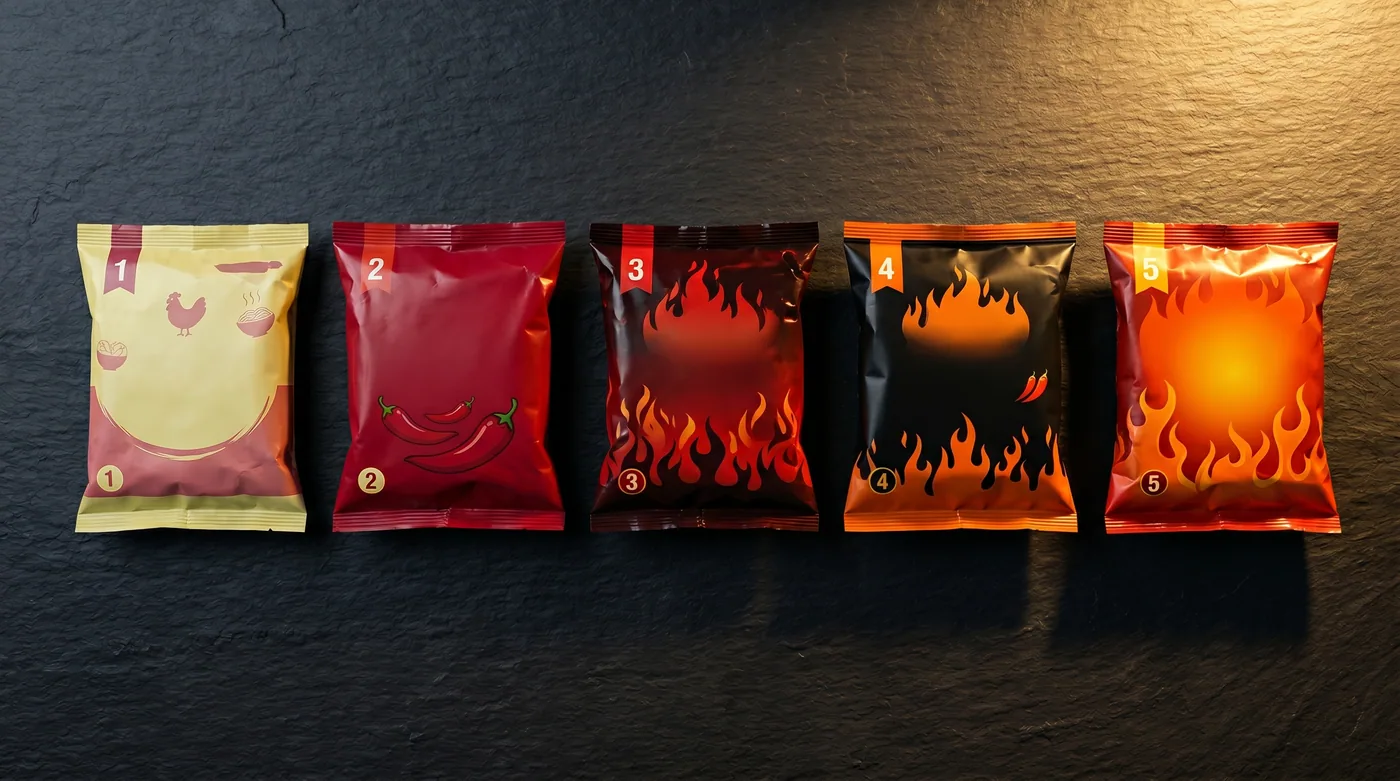
A few honorable mentions below the top 10: Maruchan Hot & Spicy Chicken (~2,800 SHU), Nongshim Shin Ramyun Original (~2,700 SHU), Nissin Cup Noodles Spicy Chicken (~2,500 SHU), and Samyang Carbonara Buldak (4,404 SHU — same heat as Original Buldak, but cream emulsion drops perceived intensity).
How this ranking works
Scoville Heat Units (SHU) measure capsaicin concentration. Higher number = hotter perception of pure capsaicin. The number is multiplicative, not linear: 8,000 SHU isn't twice as hot as 4,000 SHU — it's noticeably hotter, but the perceived intensity climb between 100,000 and 1,000,000 is far more dramatic than between 1,000 and 10,000.
Two methodology notes:
- We use brand-published SHU when available. Samyang publishes Buldak's SHU on the packaging itself. Nongshim does not, so Shin Ramyun's ~2,700 SHU figure comes from independent food-lab testing reported across multiple Korean food-science journals (2018-2022).
- We're ranking only mass-market commercial products. Restaurant challenge dishes (the Bhut Jolokia Ramen Challenge, novelty extreme-spice pop-ups, social-media-stunt versions of regular noodles) aren't on this list. If you can't buy it at H Mart or Amazon, it's not here.
We don't include personal-tolerance tests, we cooked these all and tried them claims, or photos of crying eaters. Those add nothing — the published Scoville is the actual measurement.
The top 5, in detail
1. Paldo Volcano Curry Noodle (~25,000 SHU)
The hottest commercial instant noodle in continuous worldwide distribution. Paldo's Volcano Curry is a Korean curry-style stir-fry noodle that combines a curry base with extreme capsaicin loading. Despite being significantly hotter than the famous Buldak, Volcano Curry has nothing approaching Buldak's social-media presence — it's never had a viral video moment.
The reasons matter. Volcano Curry's flavor profile is curry-forward, not spicy-forward; the heat hits as a delayed afterburn under the curry rather than as a front-loaded chili blast. For challenge-video creators, this is less visually dramatic than Buldak's immediate watering-eyes reaction. So Volcano Curry sits in actual heat-tier supremacy without the cultural awareness.
Available at H Mart, 99 Ranch, and Amazon US. ~$2.99 per single packet.
2. Samyang Buldak 3x Spicy (~13,000 SHU)
Limited release, not always available. Samyang has produced 3x Spicy Buldak as a limited-edition variant since approximately 2016, dropping for short runs of a few weeks at a time. When it's available, distribution is restricted to H Mart, select 99 Ranch locations, and dedicated Korean food importers.
The product is the same noodle base as standard Buldak, with chili oil concentration roughly tripled from the Original (4,404 SHU). The flavor profile is identical to Buldak Original — sweet-savory-chicken with a smoky chili finish — just at significantly higher capsaicin concentration.
For most spice-tolerant adults, this is the practical upper limit. Above 13,000 SHU, you're moving into territory that experienced spice-eaters describe as uncomfortable rather than enjoyable.
3. Ottogi Yeolla Yeolla Hot Spicy (~12,000 SHU)
Ottogi's competitive answer to Buldak, launched around 2017. Yeolla Yeolla translates roughly to very hot in Korean (yeol = heat, la = noodle). The product is a clear positioning bid — Ottogi watched Buldak own the viral-spicy-noodle category for five years and decided to enter with a slightly cleaner flavor profile.
The Yeolla Yeolla broth/sauce is more savory and less sweet than Buldak. Where Buldak goes for sweet-chili-front-loaded, Yeolla Yeolla goes for umami-chili-sustained. The heat tier is genuinely close to Buldak 2x (sometimes labeled hotter, sometimes lower depending on the batch).
For Ottogi brand context (the ethical-employer Korean food company), Yeolla Yeolla represents the company's most aggressive product-line bid in the modern Korean spicy-instant space.
4. Samyang Buldak Hek 2x Spicy (~8,706 SHU)
The mainline-distributed very hot Buldak. Sold globally in 5-pack and 10-pack formats across H Mart, Walmart, Costco, Target, and Amazon. Most US consumers who claim to have eaten "the spiciest noodles" mean this product.
The 2x Spicy doubles the published Scoville from Buldak Original (4,404 → 8,706). The flavor base is identical; the chili oil packet is what changes. For challenge videos and TikTok content, this is the canonical fire-noodle tier — extreme enough to look intense on camera, accessible enough that the format generates millions of attempts per year.
For non-challenge eating, most spice-tolerant adults can finish a packet. The recovery time afterward (15-20 minutes of warm sweating) is the part most casual eaters don't enjoy.
5. Indomie Pedas Mantap (~7,500 SHU)
Indonesia-domestic-market Indomie variant. Translates roughly to spicy steady. Not regularly distributed in the US — available through specialty Indonesian importers (Halal World Depot, Toko Indonesia online) and occasionally at large Asian groceries on the East Coast.
The product positions itself differently from Buldak: Buldak is a novelty/event spicy noodle; Pedas Mantap is intended as a daily very-spicy noodle for Indonesian eaters who genuinely prefer that heat tier. The flavor balance is more complex — five Indomie-style seasoning packets including the iconic kecap manis (sweet Indonesian soy) — but with significantly elevated chili content.
For US-side Indomie fans wanting a hotter variant, Pedas Mantap is the upgrade from Indomie Hot & Spicy. The catch is finding it.
The Scoville reality check
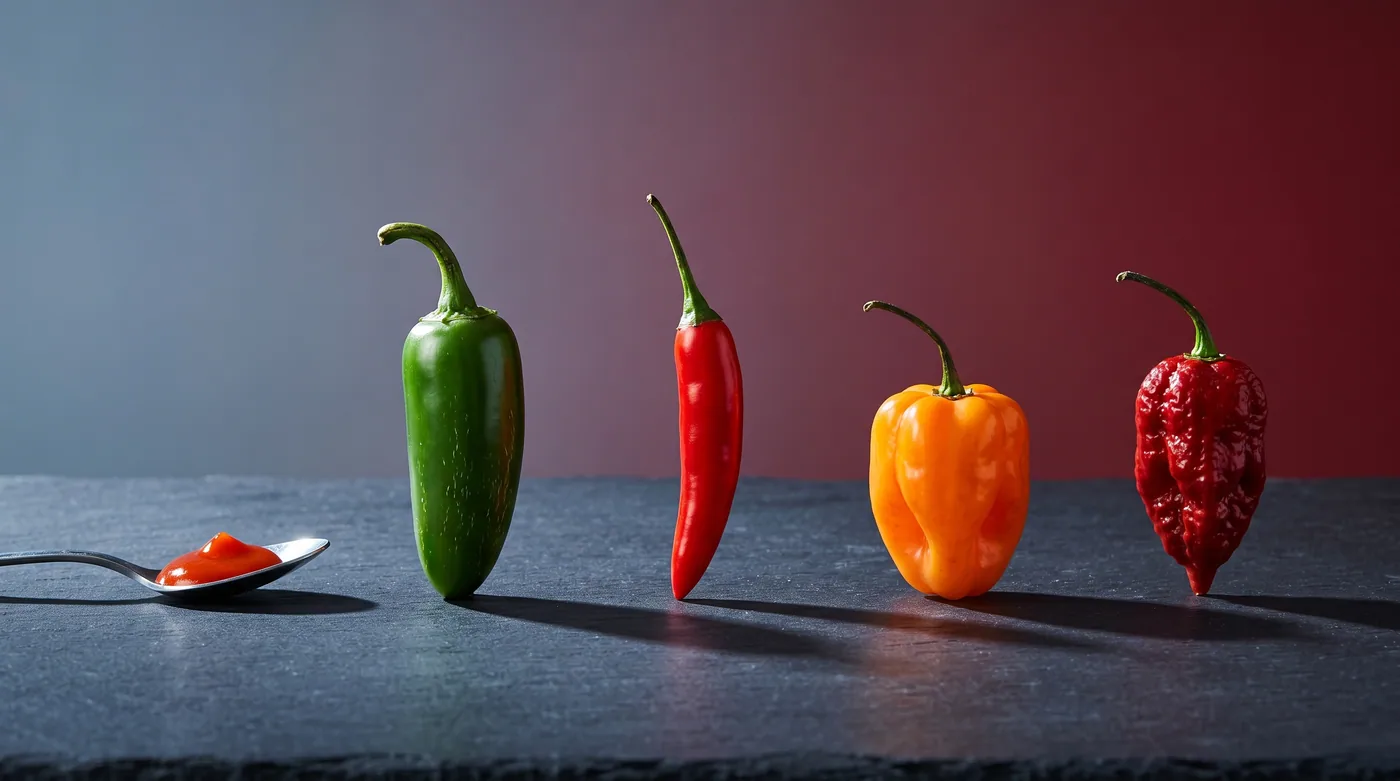
Most articles about spicy noodles conflate Scoville heat with intensity of eating experience. They're related but not the same.
Scoville measures capsaicin concentration. It's a chemistry number. A teaspoon of pure capsaicin extract would register 16,000,000+ SHU but is not edible.
Eating experience depends on three factors:
- Scoville of the chili source (the published number)
- Volume per serving (a full noodle packet's worth of concentrated chili paste vs a single drop of Tabasco)
- Vehicle composition (cheese powder, oil, sugar, dairy buffer perception)
This is why Buldak Original (4,404 SHU) is perceived as significantly hotter than a glass of Tabasco hot sauce (~5,000 SHU). The Tabasco is a few drops; the Buldak is a full meal's worth of concentrated sauce eaten in 5 minutes.
By the same logic, Buldak Carbonara (same 4,404 SHU as Original) is perceived as significantly less hot than Original because the cream emulsion buffers capsaicin perception. The Scoville is identical; the experience isn't.
For a useful pepper comparison:
- Tabasco: 2,500-5,000 SHU
- Jalapeño: 2,500-8,000 SHU
- Serrano: 10,000-23,000 SHU
- Cayenne: 30,000-50,000 SHU
- Habanero: 100,000-350,000 SHU
- Ghost pepper (Bhut Jolokia): 1,000,000+ SHU
- Carolina Reaper: 1,640,000+ SHU
So even the spiciest mass-market noodle (Paldo Volcano Curry at 25,000 SHU) lands in mid-serrano range — well below cayenne, nowhere near habanero. The marketing language around fire and extreme exists because the perceived intensity during a full-bowl serving is genuinely high, not because the chemistry is exotic.
Spicy noodles by category
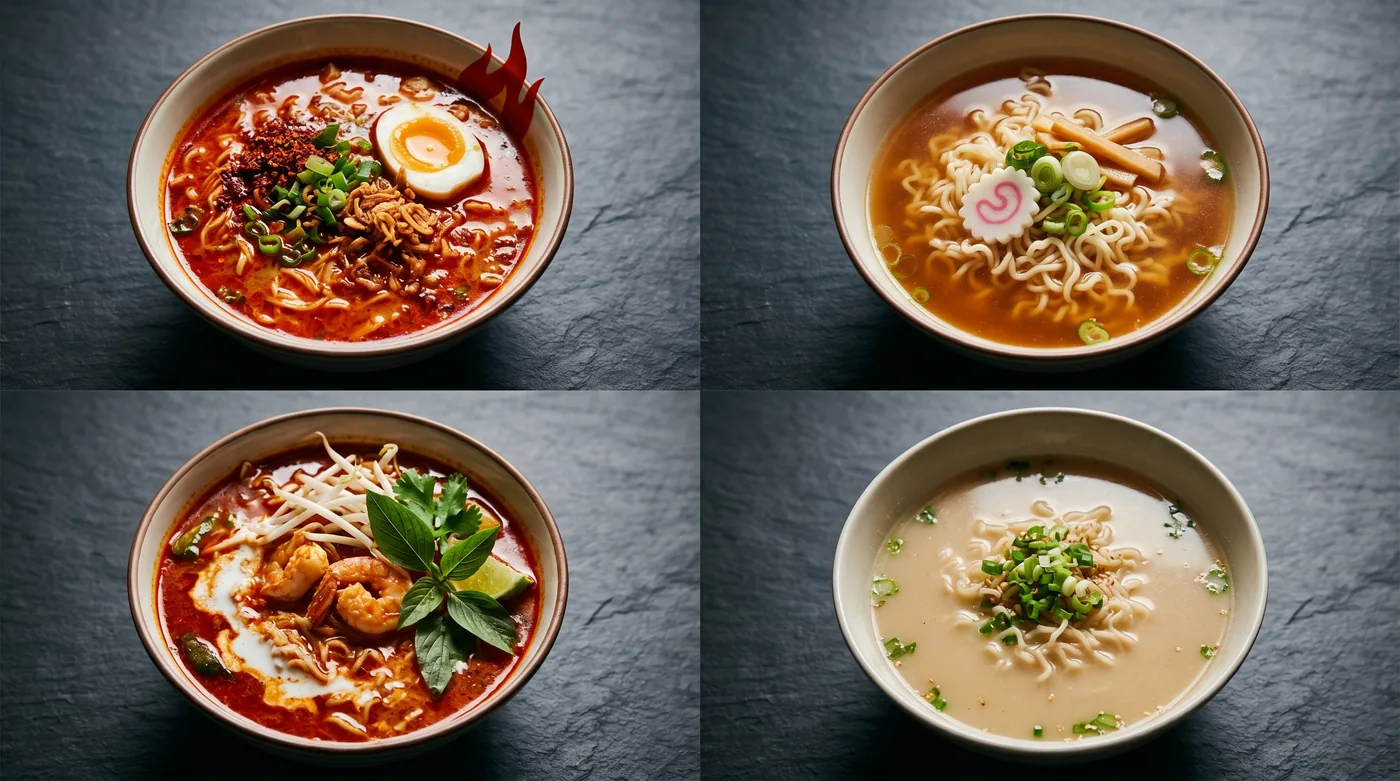
The mass-market spicy-noodle world breaks into four cultural tiers.
Korean viral tier — Buldak (all variants), Yeolla Yeolla, Volcano Curry. Stir-fry format, sauce-coated, social-media-driven. Identity products, not daily eating.
Korean everyday tier — Shin Ramyun, Champong, Jin Ramen Hot. Soup format, sustained warmth, Korean-pantry staples. Daily eating, not events.
Southeast Asian regional tier — Indomie Hot & Spicy / Pedas Mantap, Mama Tom Yum Extra Hot, Vifon Pho Bo. Region-specific flavor profiles, often hotter than mainstream Western expectations but never marketed as challenge products.
Mainstream American tier — Maruchan Hot & Spicy, Nissin Cup Noodles Spicy. Heat-tiered for American palates (under 3,000 SHU), broad grocery distribution, no specific cultural identity beyond convenience instant ramen.
The tier matters more than the absolute SHU when picking a noodle. Someone wanting Korean fire-noodle culture should buy in the viral tier. Someone wanting a daily slightly-spicy soup should buy Korean-everyday. Someone wanting a regional flavor experience should look to the SE Asian tier.
Safety: when spicy noodles become a real concern
For most adults, a single packet of any noodle on this list is safe. The genuine medical concerns are narrow:
- Capsaicin sensitivity — a small percentage of adults have heightened sensitivity. The symptoms (severe sweating, GI distress, vomiting) are uncomfortable but not life-threatening at single-packet doses.
- Pre-existing GI conditions — GERD, severe acid reflux, peptic ulcer disease, active IBS. The heat can trigger genuine symptoms in these populations.
- Cardiovascular sensitivity — extreme capsaicin doses can spike heart rate and blood pressure. People with arrhythmia or recent cardiac events should be cautious with the high-SHU tiers (>8,000).
- Children under 8 — developing GI tracts are more sensitive. The viral-tier products aren't appropriate for young children, regardless of marketing.
The 2024 death of a 14-year-old in Massachusetts after the One Chip Challenge (a single tortilla chip dusted with ghost-pepper-and-Carolina-Reaper extract, well above 1,000,000 SHU) has generated genuine internet concern about spicy-noodle safety. That product is in a completely different chemistry tier from any mass-market noodle on this list. No documented death has been attributed to a single packet of any commercially-sold spicy instant noodle.
That said: don't eat multiple packets of high-tier Buldak in one sitting on a dare. Spicy-noodle challenges have produced documented hospitalizations for severe GI distress.
Where to buy each in the US
| Product | H Mart | 99 Ranch | Walmart / Target / Kroger | Amazon |
|---|---|---|---|---|
| Paldo Volcano Curry | ✓ | ✓ | — | ✓ |
| Buldak 3x Spicy (when available) | ✓ | sometimes | — | ✓ (limited) |
| Yeolla Yeolla | ✓ | sometimes | — | ✓ |
| Buldak 2x Spicy | ✓ | ✓ | ✓ (Walmart, Costco) | ✓ |
| Indomie Pedas Mantap | sometimes | — | — | specialty importers |
| Mama Tom Yum Extra Hot | ✓ | ✓ | — | ✓ |
| Buldak Original | ✓ | ✓ | ✓ (mainstream) | ✓ |
| Buldak Curry | ✓ | sometimes | — | ✓ |
| Nongshim Champong | ✓ | ✓ | sometimes | ✓ |
| Indomie Mi Goreng H&S | ✓ | ✓ | — | ✓ |
For full distribution details on the major brands, see the dedicated brand pages: Buldak, Samyang Foods, Nongshim, Ottogi, Shin Ramyun.
What's missing from this list — and why
A few notable absences worth explaining.
- Restaurant challenge ramen (the Bhut Jolokia Ramen Challenge, the various Naga/ghost-pepper restaurant items) — these exceed 1,000,000 SHU but are restaurant-only, often custom-made, and not retail products. Including them would conflate two different categories.
- Custom-spiced YouTube challenge versions — adding extra Buldak sauce packets to a single bowl doesn't make a new product; it makes a personal experiment. The ranking covers products as sold.
- Sichuan mala noodles — mala combines má (numbing from Sichuan peppercorn) with la (heat from chili). The numbing intensity is real but isn't measured in Scoville (it's a different compound — hydroxy-alpha-sanshool, not capsaicin). Mass-market mala instant noodles like Wei Long's mala lineup are intensely flavored but don't slot into a pure-Scoville ranking.
- Korean carbonara variants — Buldak Carbonara has the same 4,404 SHU as Original but a softer perceived intensity due to cream buffering. The Scoville ranking includes it implicitly as a tied-with-Original entry.
FAQ
What's the spiciest noodle in the world? Paldo Volcano Curry at ~25,000 SHU is the hottest mass-market instant noodle in continuous production. Above this tier, you enter limited releases (Buldak 3x Spicy at ~13,000) or restaurant challenge dishes (1,000,000+ SHU, not retail).
How hot is Buldak compared to a real pepper? Buldak Original (4,404 SHU) lands between Tabasco and jalapeño. 2x Spicy (~8,706 SHU) reaches upper jalapeño / low serrano. None of the standard Buldak variants approach habanero.
Are spicy noodles actually dangerous? Safe for healthy adults. Genuine medical risks are limited to GERD, severe reflux, cardiovascular conditions, capsaicin sensitivity, and young children. The 2024 One Chip Challenge death involved ghost-pepper extract at >1,000,000 SHU — completely different chemistry tier from any noodle on this list.
What's hotter — Buldak or Shin Ramyun? Buldak Original (4,404 SHU) is significantly hotter than Shin Ramyun (~2,700 SHU). About 60% heat difference. Different culinary categories — Shin is soup, Buldak is sauce.
What about Mexican / Indian / Sichuan-style noodles? Indian Maggi Hot Heads and Thai Mama Extra Hot land in the 5,000-8,000 SHU range, similar to mid-tier Buldak. Sichuan mala noodles use peppercorn numbing (a different compound) so they aren't on a pure-Scoville ranking.
Where can I buy these in the US? H Mart and 99 Ranch for the Korean and Asian variants. Walmart/Target/Kroger for the mainstream picks (Buldak Original, Shin Ramyun, Maruchan, Nissin). Amazon US stocks every variant.
Read Next
- Buldak — the cult brand behind the viral fire noodle
- Samyang Foods — the company that invented Korean instant ramen
- Shin Ramyun vs Buldak — side-by-side
- Best Korean Instant Ramyeon
- Korean Ramyeon — Type Guide